If you’ve been searching fall equinox pagan rituals hoping for something that actually blends real Wiccan tradition with your own zodiac sign, you’re in the right place. Every year around September 22, the sun crosses into Libra and the whole sky — not just the earth beneath your feet — tips into balance. Pagans call this sabbat Mabon. Astrologers call it the moment the sun enters Libra. We’re going to show you how to honor both, sign by sign, with a ritual you can actually finish before dinner.
Below you’ll find the exact 2026 date and time for the equinox, the spiritual themes this sabbat carries, a personalized ritual for all twelve signs, and a full step-by-step altar you can build tonight — no prior pagan practice required.
What Is a Fall Equinox Pagan Celebration? Mabon, Meaning & Origins

A fall equinox pagan celebration is rooted in the modern Wiccan sabbat known as Mabon — pronounced MAY-bun or MAH-bawn, depending on which tradition you ask. Mabon marks the second of three harvest festivals in the Wheel of the Year (after Lughnasadh in early August, before Samhain at the end of October), and it falls on the exact date of the astronomical autumn equinox.
The name “Mabon” itself is a relatively recent addition to pagan vocabulary — coined in the 1970s by scholar Aidan Kelly, who borrowed it from Mabon ap Modron, a figure from Welsh mythology associated with light, youth, and the changing of seasons. Older traditions simply called this point in the year the “Autumn Equinox,” “Harvest Home,” or the “Feast of the Ingathering.” Whatever name you use, the meaning has stayed the same for thousands of years: this is the moment we say thank you for what we’ve grown, and start preparing for the dark half of the year.
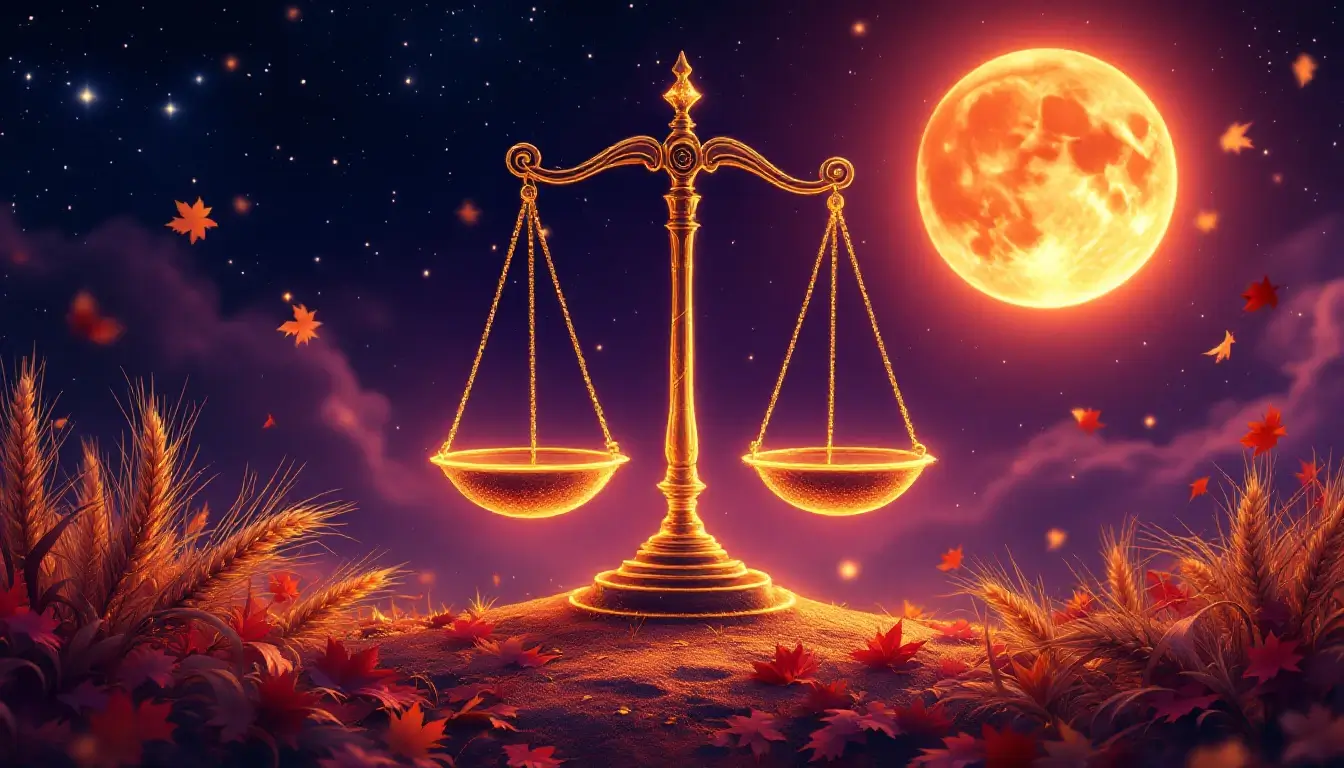
Astrologically, the equinox is even more precise than the pagan calendar suggests — it isn’t just “late September,” it’s the exact second the sun crosses 0° Libra, the sign of balance, harmony, and fair exchange. That’s not folklore. That’s celestial mechanics. And it’s why a fall equinox pagan ritual and an astrology-based Libra ritual are, quite literally, celebrating the same moment from two different doors.
Long before anyone called it Mabon, cultures across the world were marking this exact point on the calendar. Ancient Greeks held autumn rites for Demeter and Persephone, tying the season to the myth of the harvest goddess losing her daughter to the underworld. Old English farming communities called it “Harvest Home” and celebrated with the last cutting of the grain, a corn dolly woven from the final sheaf, and a shared feast for the whole village. Even without a shared name, nearly every agricultural society independently landed on the same idea: when the days and nights balance, you pause, give thanks, and prepare. Modern pagans didn’t invent this instinct — they just gave it a name and a formal place on the Wheel of the Year.
Mabon 2026: Exact Date, Time & the Sun’s Entry Into Libra

Here’s your quick answer: the 2026 fall equinox falls on Tuesday, September 22 in the Americas, tipping into September 23 across Europe, Asia, and Australia. The sun enters Libra at the following exact times:
- 8:05 PM ET / 5:05 PM PT — September 22, 2026
- 1:05 AM BST — September 23, 2026 (UK)
- 8:05 AM WITA — September 23, 2026 (Bali/Indonesia)
- 10:05 AM AEST — September 23, 2026 (Sydney)
If you want the exact minute in your own timezone, plus a deeper breakdown of what this transit means for the entire zodiac wheel, our complete Fall Equinox 2026 guide covers every region and every sign in detail. This article is your companion piece — the ritual and pagan-tradition side of the same cosmic event.
What makes this moment so potent for ritual work is that day and night are, for one instant, in perfect equilibrium. From here forward, the Northern Hemisphere tips toward darkness while the Southern Hemisphere tips toward light. Any ritual performed at (or near) the equinox borrows that energy of exact balance — which is exactly why Mabon rituals lean so heavily on themes of gratitude, reciprocity, and “what do I let go of so something else can grow.”
The Spiritual Themes of the Autumn Equinox: Balance, Harvest & Release
Every sabbat carries its own emotional signature, and Mabon’s is unmistakably about equilibrium. Three themes show up in nearly every pagan tradition’s approach to this holiday:
Balance
With the sun entering Libra — the sign literally represented by a scale — this is the year’s built-in checkpoint. Where has your year tipped too far toward work and not enough toward rest? Too much giving, not enough receiving? Mabon asks you to notice the imbalance before the dark months make it harder to correct.
Harvest
This is the “second harvest” in the pagan calendar — apples, grapes, squash, and grain are all coming in. Symbolically, it’s not just about literal crops. It’s about harvesting the results of intentions you planted back at Ostara (spring equinox) or even Imbolc. What did you set in motion this year that’s finally ready to be gathered in?
Release
As the Wheel turns toward Samhain and winter, Mabon is your last graceful exit ramp before the introspective season begins. Pagans traditionally use this sabbat to consciously release what no longer serves — a habit, a grudge, a version of yourself you’ve outgrown — so you enter winter lighter.
These three themes are the backbone of every ritual in this guide, and they’re also why the fall equinox pairs so naturally with lunar ritual work. If you want to deepen your understanding of how moon phases interact with seasonal shifts like this one, our full moon meaning guide is a great companion read.
Fall Equinox Rituals for Every Zodiac Sign
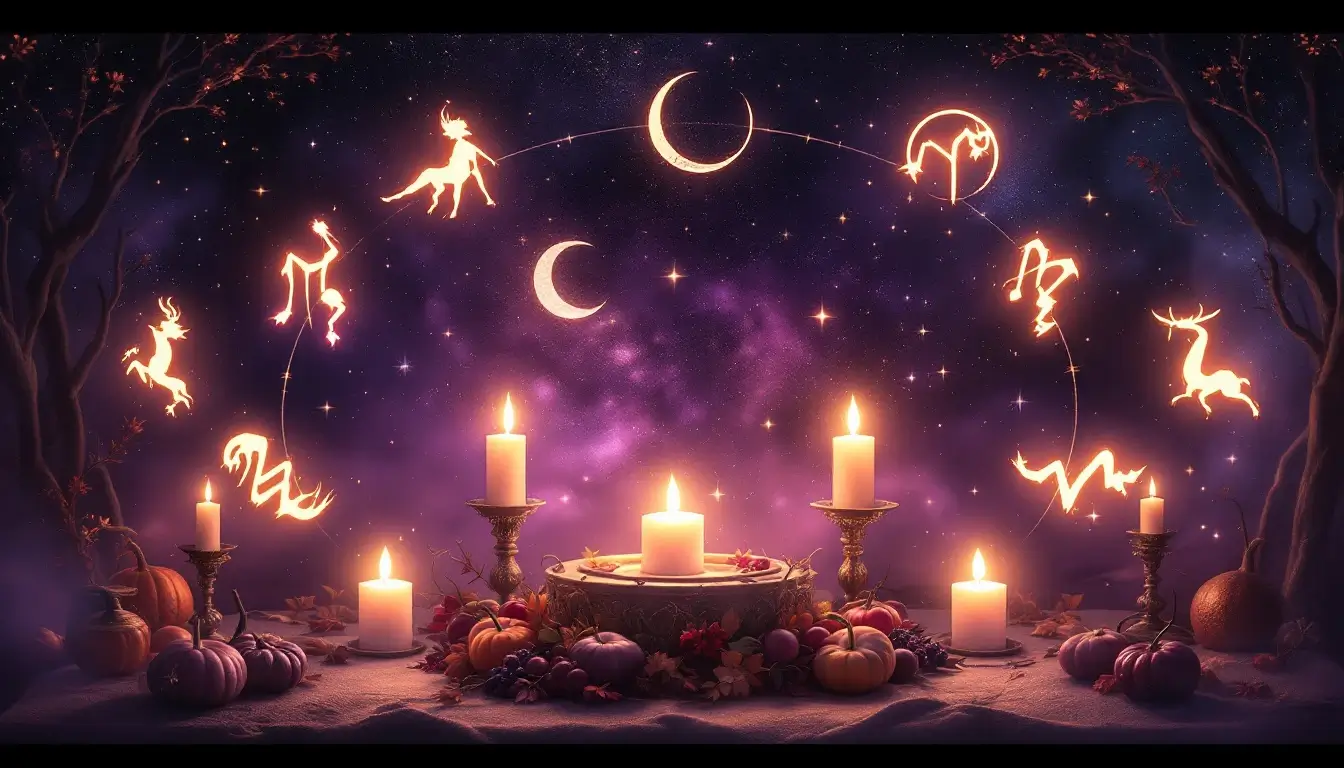
Because the equinox activates the whole zodiac wheel (not just Libra), here’s a mini-ritual tailored to each sign’s natural strengths. Pick the one for your sun sign for a quick daily-life read, or use your rising sign if you know it — the rising sign shapes how you actually *behave* during a ritual, so it often produces the more accurate fit. If you know your full birth chart, check which house currently holds 0° Libra; that house is where this equinox’s balance-and-release theme will show up most concretely in your life this season.
- Aries: Channel your fire into a “release and refocus” candle ritual — write down what’s burning you out, then light it safely in a fireproof bowl.
- Taurus: Build a small harvest altar with real fruit, bread, and soil. Eat something from it slowly and mindfully as your ritual.
- Gemini: Write two letters — one to the version of you from spring, one from your future winter self. Read both aloud.
- Cancer: Host a small gratitude dinner, even if it’s just you and one candle. Cancer’s ritual power lives in nourishment shared.
- Leo: Create a “harvest of wins” list and read it aloud in front of a mirror, crown yourself (literally, if you’re feeling playful) for what you’ve grown.
- Virgo: This is your season’s afterglow — use it to organize an altar space, cleanse your home, and set a practical intention for the next quarter.
- Libra: This is your sabbat and your season. A scale-balancing ritual — literally weighing two objects representing “give” and “receive” — is especially potent for you.
- Scorpio: Do a release ritual with water — write what you’re letting go of on paper that dissolves, and release it into a bowl of water.
- Sagittarius: Plant a bulb (literal or symbolic) for something you want to grow by spring. Sagittarius rituals work best future-facing.
- Capricorn: Reflect on your year’s structure — what “worked,” what needs rebuilding — and write a short, practical plan for the dark months.
- Aquarius: Gather with your community (even a small group chat counts) and share one gratitude and one intention each.
- Pisces: A moon-water ritual under that night’s sky, paired with journaling, taps directly into Pisces’ intuitive strength.
Whichever ritual you choose, keep it simple. A cluttered altar or an overcomplicated ceremony works against the very balance you’re trying to invoke. If you’d rather wear your sign than just ritualize it, our Libra Celestial Painting Eco Tote Bag makes a genuinely useful carryall for hauling altar supplies, market harvest finds, or just your everyday cosmic-witch essentials.
Setting Your Harvest Intentions: What to Release at the Equinox
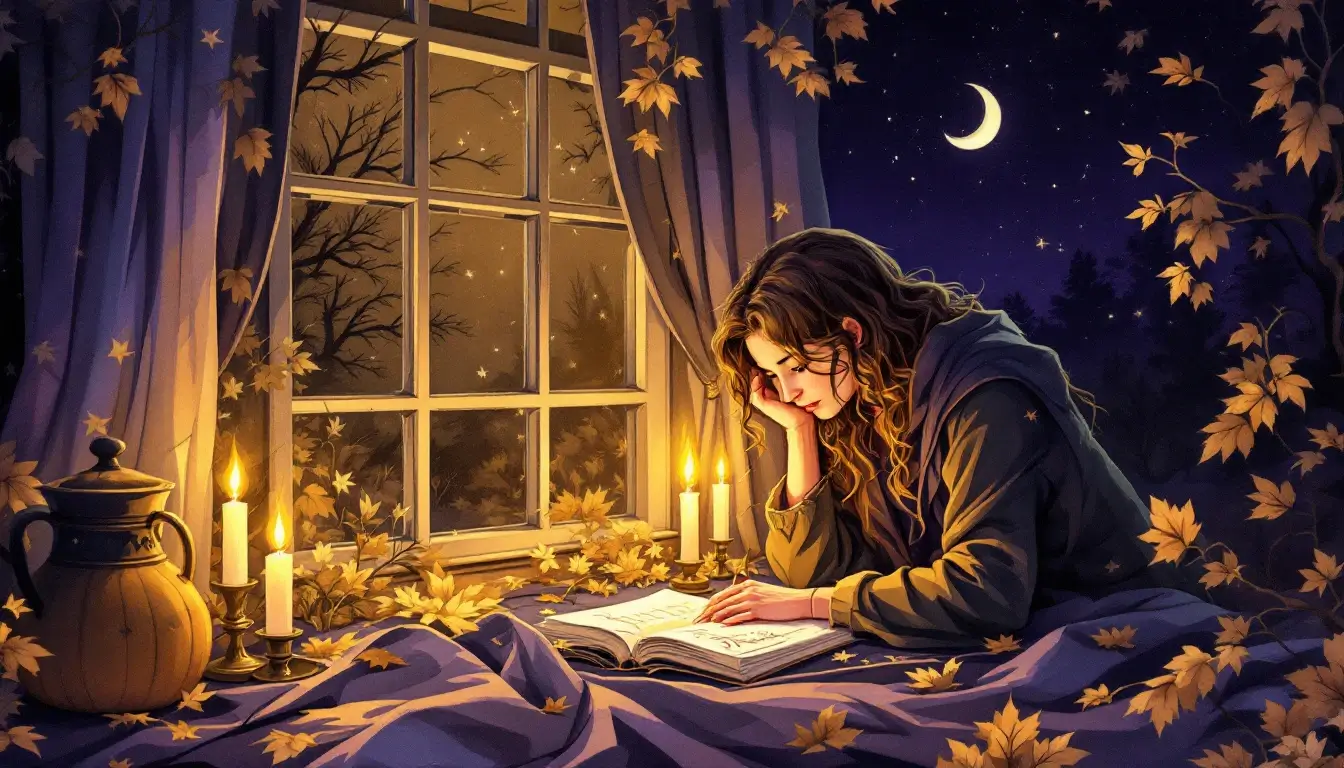
Before you build any altar or light any candle, sit with one question: what did this year actually grow, and what’s ready to be cut loose? Mabon rewards specificity. “I want to release negativity” is vague enough that your subconscious won’t know what to do with it. “I’m releasing the guilt I still carry about leaving that job” is a ritual with teeth.
Try this two-column exercise before your ritual:
- Harvest column: List three things you grew, built, learned, or survived this year that you’re genuinely proud of — no matter how small.
- Release column: List one to three things (habits, relationships, self-beliefs) that took up space this year without giving anything back.
Read your harvest column aloud first — pagans traditionally believe gratitude should always precede release, because it grounds you before you let go of anything. Then, for each item in your release column, either burn the paper (safely, in a fireproof dish), bury it, or tear it into compost-sized pieces and add it to soil. The physical act matters more than the specific method — your body needs to register the release, not just your mind.
A real example makes this easier to picture. One version of a finished intention might read: “I’m grateful I finally set a boundary with my sister this year, even though it was uncomfortable. I’m releasing the belief that keeping the peace matters more than my own energy.” Notice how specific it is — it names an actual relationship and an actual belief, not a vague wish for “more peace.” The equinox rewards that kind of honesty because Libra energy isn’t about avoiding conflict, it’s about weighing things accurately. Vague intentions can’t be weighed; specific ones can.
Fall Equinox Pagan FAQs: Correspondences, Pronunciation & Common Questions
How do you pronounce Mabon?
Most modern pagans say MAY-bun, though you’ll also hear MAH-bawn or MAY-vhon depending on regional and Celtic-reconstructionist influence. There’s no single “correct” pronunciation — pick the one that feels natural and use it consistently.
What colors are associated with the fall equinox?
Deep orange, burgundy, gold, brown, and forest green — the visual palette of the harvest itself. Libra’s ruling color, a soft rose-pink, blends beautifully into equinox altars for anyone leaning into the astrological side of the sabbat.
What herbs and crystals go with Mabon?
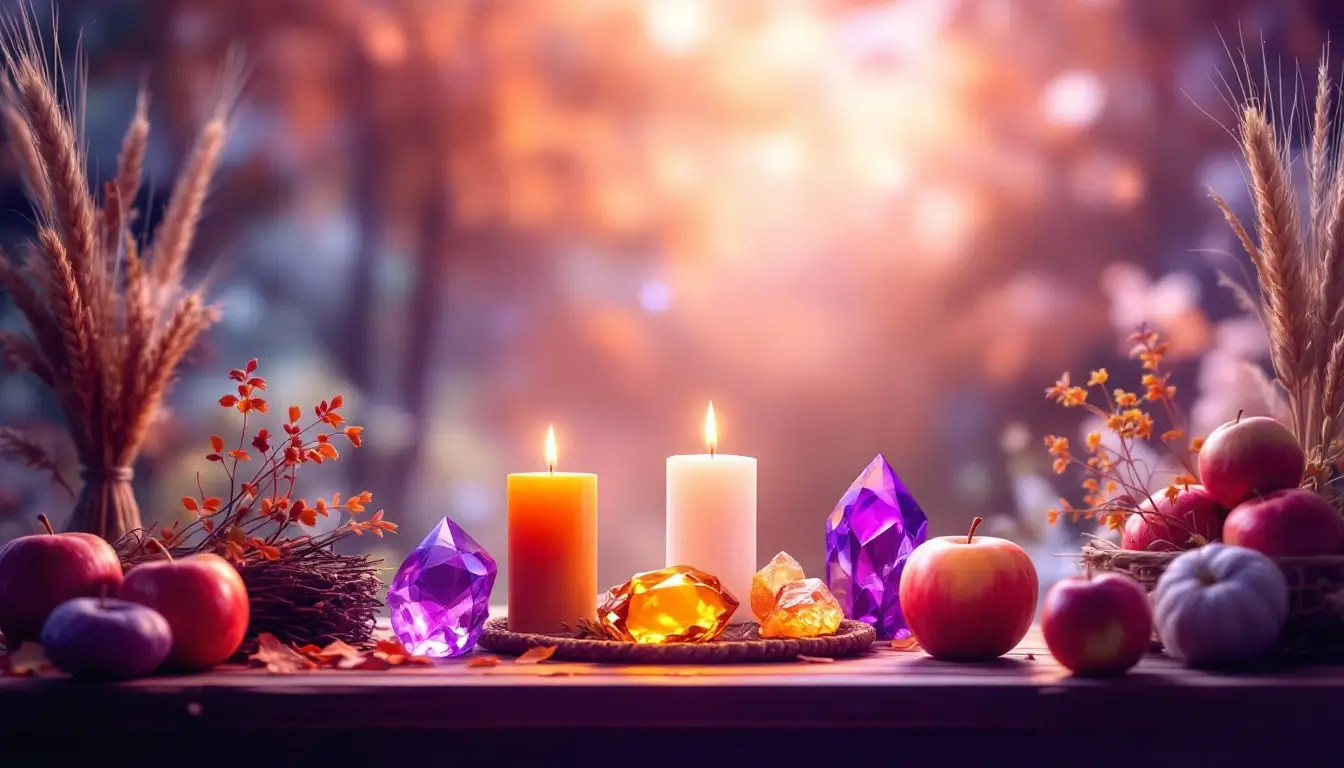
Sage, rosemary, marigold, and cinnamon are traditional Mabon herbs, often used in incense or tucked into a sachet for the altar. For crystals, citrine (abundance), carnelian (vitality), and smoky quartz (grounding and release) are the most commonly used stones for equinox work.
Is Mabon the same as the fall equinox?
Yes — Mabon is the pagan/Wiccan name for the astronomical fall equinox. They happen on the exact same date and time; “Mabon” simply refers to the spiritual observance of that astronomical event.
What’s the difference between an equinox and a solstice?
An equinox is the moment day and night are equal length everywhere on Earth — it happens twice a year, in spring and fall, when the sun crosses the celestial equator. A solstice is the opposite extreme: the longest or shortest day of the year, occurring in summer and winter when the sun reaches its farthest point north or south. In the Wheel of the Year, equinoxes (Ostara and Mabon) mark balance, while solstices (Litha and Yule) mark peaks — of light or of darkness.
What if I’m in the Southern Hemisphere?
Flip it. If you’re in Australia, South Africa, or South America, September 22–23 is actually your spring equinox — the pagan equivalent of Ostara, not Mabon. Southern Hemisphere practitioners typically celebrate their Mabon around March 20–21 instead, when their own autumn equinox arrives.
Do I need to be Wiccan to celebrate the fall equinox?
Not at all. Mabon-style rituals are widely practiced by secular astrology fans, eclectic pagans, and anyone drawn to seasonal ritual — you don’t need initiation into any specific tradition to light a candle and set an intention.
What if I only have five minutes?
Light one candle, name one thing you’re grateful for out loud, and name one thing you’re ready to release. That’s the entire ritual reduced to its essential shape — the equinox’s balance-and-release energy is present the instant you consciously name both sides, even without an altar, herbs, or ceremony.
Creating Your Autumn Equinox Altar: A Step-by-Step Ritual
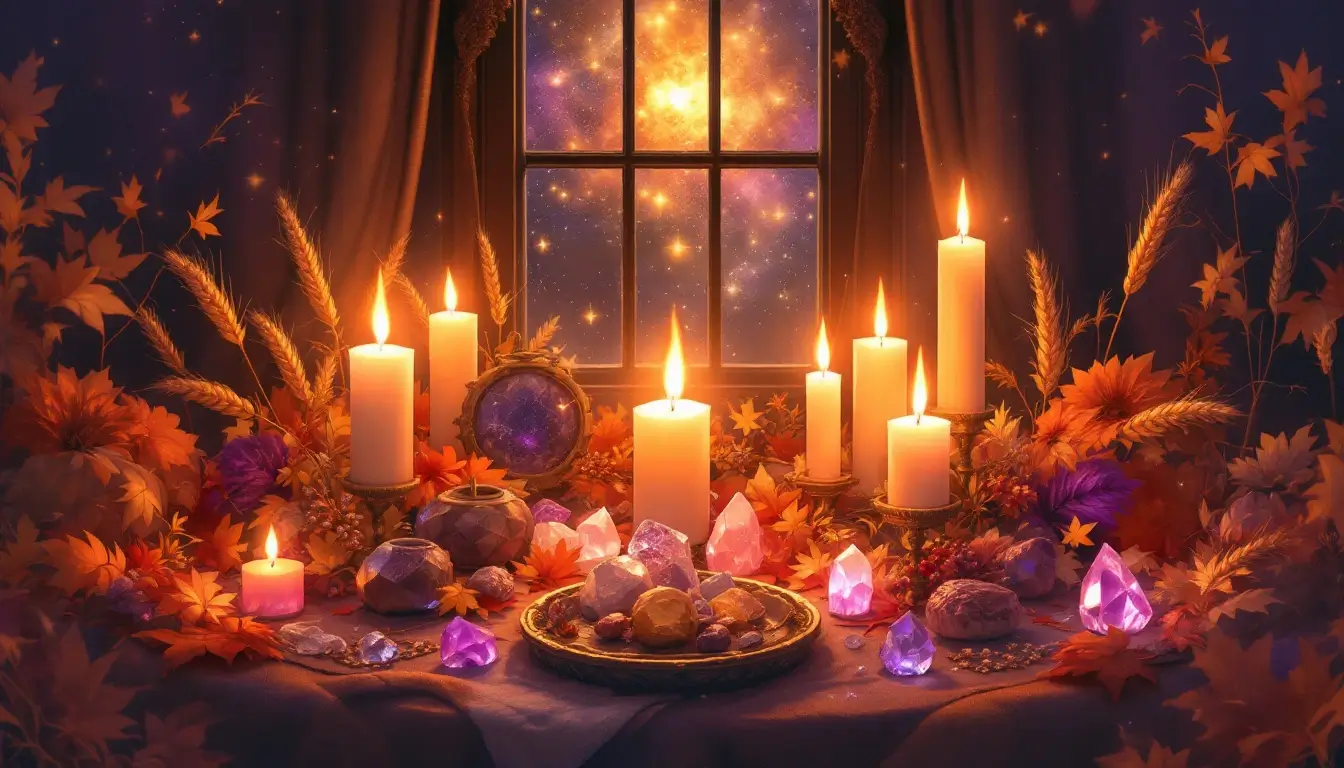
You don’t need a dedicated ritual room or years of practice to build a meaningful Mabon altar — you need about twenty minutes and a flat surface. Before you place a single item, take sixty seconds to clear the space itself: wipe down the surface, open a window if you can, or simply take three slow breaths in the spot you’ve chosen. This isn’t superstition so much as intention-setting — you’re telling yourself, physically, that what happens here is different from the rest of your day. Here’s the full sequence:
- Choose your space. A windowsill, a shelf, or even a cleared corner of a table works. Face it toward the sunset if you can — equinox energy is strongest at twilight.
- Lay a cloth in harvest colors — orange, burgundy, gold, or deep green.
- Add something from each element: a candle (fire), a small dish of water, a stone or crystal (earth — citrine or carnelian work beautifully here), and incense or a feather (air).
- Bring in the harvest. Apples, grapes, a small gourd, or dried wheat all represent the season’s abundance. If it’s from a farmer’s market, even better — local harvest energy is part of the ritual.
- Place your two lists — the harvest column and release column from the previous section — beneath a candle or crystal.
- Light the candle and speak your gratitude aloud, then your intention for what you’re releasing.
- Let the candle burn down naturally if it’s safe to do so, or extinguish it and re-light it at sunset for three consecutive nights to carry the ritual through the full equinox window.
Whatever you build, let it be honest rather than elaborate — the whole point of Mabon is to model balance, not perfection. And if this seasonal ritual practice speaks to you, it pairs beautifully with our Winter Solstice 2026 guide for the next sabbat on the Wheel, our Capricorn Full Moon ritual guide for your next lunar checkpoint, and our 2026 astrology overview for the bigger cosmic picture behind this year’s equinox.
However you choose to mark it, the fall equinox pagan tradition has survived for one simple reason: balance is a practice, not a destination. Every year, the sky gives you one more chance to recalibrate — take it.

Toast to the Season in Libra Style
Raise a glass to balance with our Laser Engraved Libra Horoscope Wineglass — the perfect way to toast your Mabon harvest or gift a fellow Libra season baby.

Your Stars, Your Inbox
Get weekly horoscope insights, cosmic guidance, and exclusive offers delivered straight to your inbox. Join our community of star-seekers today.