If you’ve spent any time exploring astrology, you’ve probably heard whispers of the Vedic tradition — that ancient Indian system of star-reading that predates most Western horoscopes by thousands of years. And if you’ve ever tried to run your own chart on a Vedic site, you know exactly how it goes: a wall of Sanskrit terms, a square diagram that looks nothing like your familiar zodiac wheel, and the sudden panic that your sun sign might not even be the one you thought it was. Take a breath. This is your free Vedic birth chart with interpretation guide, written for the Western reader who wants the ancient wisdom without the intimidation.
Over the next twenty minutes, we’ll walk you through generating your own chart on a trusted free tool, then translating what you see in plain English — using the astrological vocabulary you already know. By the end, you’ll understand your Vedic ascendant, your moon sign, your ruling nakshatra, and where you sit in your current planetary life phase. No sanskrit dictionary required. Just curiosity and a cup of chai.
What Is a Vedic Birth Chart? (And How It Differs From Western)
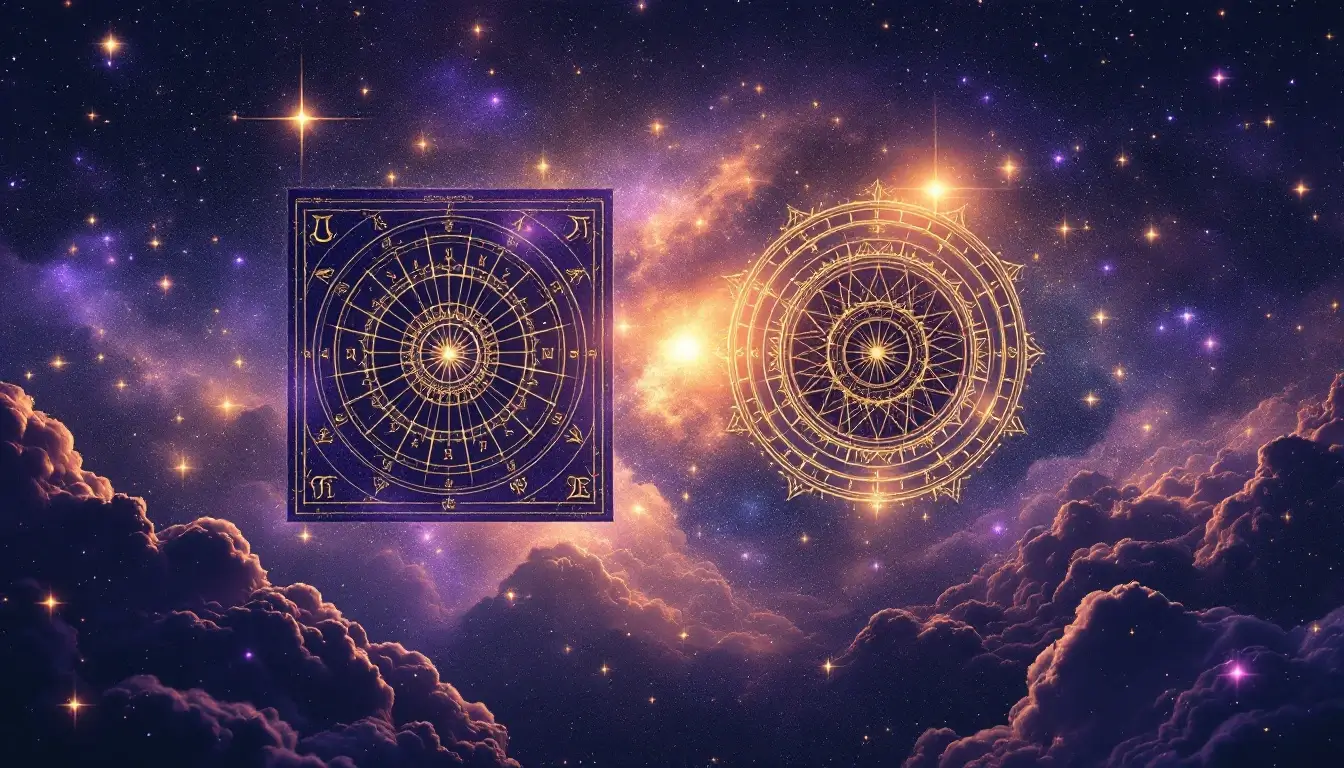
A Vedic birth chart — traditionally called a Janma Kundali or simply Kundli — is the ancient Indian counterpart to the Western natal chart. Both are snapshots of the sky at the exact moment you were born, mapped onto the twelve zodiac signs and twelve houses. Both use the same planets (with a few notable additions on the Vedic side). And both aim to answer the same eternal question: What was written in the stars for me?
The difference lies in which sky the chart tracks. Western astrology uses the tropical zodiac, which is fixed to the seasons — Aries always begins at the spring equinox, no matter where the actual constellations sit. Vedic astrology uses the sidereal zodiac, which is fixed to the visible stars. Because Earth’s axis wobbles slowly over 26,000 years (a phenomenon called the precession of the equinoxes), those two systems have drifted about 24 degrees apart.
The practical result? Your Vedic sun sign is usually one sign earlier than your Western sun sign. A Western Leo often becomes a Vedic Cancer. A Western Aries often reads as a Vedic Pisces. Don’t panic — you haven’t lost your identity. You’ve simply gained a second lens. If you’d like the deeper theoretical background, our complete guide to Vedic astrology birth charts unpacks the tradition’s philosophical roots.
Vedic vs. Western at a Glance
- Zodiac: Sidereal (Vedic) vs. Tropical (Western)
- Chart shape: Square-within-a-square (North Indian) or diamond grid (South Indian) vs. round wheel
- Primary sign: Vedic emphasizes the Moon sign (Rasi) and Rising sign (Lagna) more than the Sun
- Prediction tool: Vedic uses planetary life cycles called dashas — Western uses transit forecasts
- Extra bodies: Vedic includes Rahu and Ketu (the Moon’s north and south nodes) as full planetary players
Where to Generate Your Free Vedic Chart (Recommended Tools + What to Input)

Before you can interpret anything, you need to generate the raw chart. The good news: several excellent tools do this for free in under a minute. The catch: most of them dump a wall of Sanskrit at you and assume you already know what you’re looking at. That’s exactly the gap this guide fills.
Our Recommended Free Chart Generators
Any of the three below will produce a clean, accurate Vedic chart. Pick the one whose interface feels least overwhelming to you — the underlying math is identical.
- Prokerala Kundli: The cleanest free option for beginners. It defaults to showing both the North Indian (square) and South Indian (diamond) chart layouts side by side, plus a brief English interpretation of each planet’s placement.
- AstroSage Kundli: The most comprehensive free tool. It includes your full Vimshottari Dasha timeline (your planetary life phases, which we’ll cover in Section 5) and a Navamsa D9 chart for relationship insight.
- Astro-Seek Vedic Birth Chart: Best if you’re already familiar with Western astrology and want a side-by-side comparison — Astro-Seek renders both charts on the same page.
What You’ll Need to Enter
Every Vedic calculator asks for the same three pieces of information. Accuracy matters — especially with birth time, which sets your rising sign.
- Date of birth — day, month, year. Straightforward.
- Time of birth — as precise as you can get. Your birth certificate or hospital records are the gold standard. Even a fifteen-minute error can shift your ascendant by half a sign.
- Place of birth — city and country. The calculator uses this to determine the correct time zone and geographic coordinates.
Set the ayanamsa to Lahiri if the tool asks. Lahiri ayanamsa is the officially adopted Indian government standard and the one used by most professional Vedic astrologers. If you don’t see the option, don’t worry — every reputable free tool defaults to Lahiri automatically.
Once you’ve generated the chart, save the page or screenshot it. You’ll be looking at it repeatedly as we walk through each layer below.
The Big Three: Ascendant (Lagna), Moon Sign (Rasi), and Nakshatra

Vedic astrology emphasizes three foundational elements — what we might call the Vedic Big Three. These three placements do about seventy percent of the personality work in your chart. Learn them, and you already know more Vedic astrology than most casual dabblers.
Lagna (Your Ascendant, or Rising Sign)
Your Lagna — pronounced LUG-nah — is the zodiac sign that was rising over the eastern horizon at the exact moment you were born. In Western astrology, we call this the rising sign or ascendant. In Vedic tradition, it’s considered the single most important placement in your chart. It reveals how you show up in the world, your body type, your early conditioning, and the way strangers first read you.
You’ll find your Lagna in the first house of your chart — the top-center square in the North Indian layout, or the box in the second-from-top row in the South Indian layout. Whatever sign sits there is your Lagna. Everything else in the chart is read relative to the Lagna, which is why Vedic astrologers ask for your rising sign before your sun sign.
Rasi (Your Moon Sign)
Your Rasi is where the Moon was sitting at your birth — your Moon sign. In Vedic astrology, this placement matters more than your Sun. Traditional practice actually calls your Rasi “your sign” in daily conversation. If you tell a Vedic astrologer “I’m a Leo,” they’ll assume you mean Moon-in-Leo.
Why the emphasis on the Moon? Vedic tradition holds that the Moon governs the mind, emotions, mother, home, and inner life — the private landscape that shapes how you actually experience being human. The Sun rules public identity and ego, which the tradition considers a secondary layer. Your Rasi is your emotional weather. Your Lagna is your outward-facing persona. Together they form the core of who you are.
Nakshatra (Your Lunar Constellation)
Here’s where Vedic astrology gets exquisitely detailed. Each of the twelve zodiac signs is divided into smaller segments called nakshatras — 27 lunar constellations that add a whole extra layer of nuance. Every nakshatra has its own presiding deity, symbol, and personality signature.
Your birth nakshatra is determined by the Moon’s precise position at birth. You might have a Moon in Cancer and a birth nakshatra of Pushya, which is often called “the star of nourishment.” The Cancer Moon tells you that you feel deeply and value security. The Pushya nakshatra layers on a gift for caretaking, feeding others, and building emotional sanctuary. It’s like a genome scanner for your inner life.
Every good free calculator will name your nakshatra directly in the results. Look for a line that reads something like “Nakshatra: Rohini” or “Janma Nakshatra: Ashwini.” That’s yours. If you want a poetic gateway into your nakshatra’s story, our guide to what your full birth chart reveals touches on lunar mansions as part of the broader chart picture.
Reading the 12 Houses (Bhavas) in Plain English
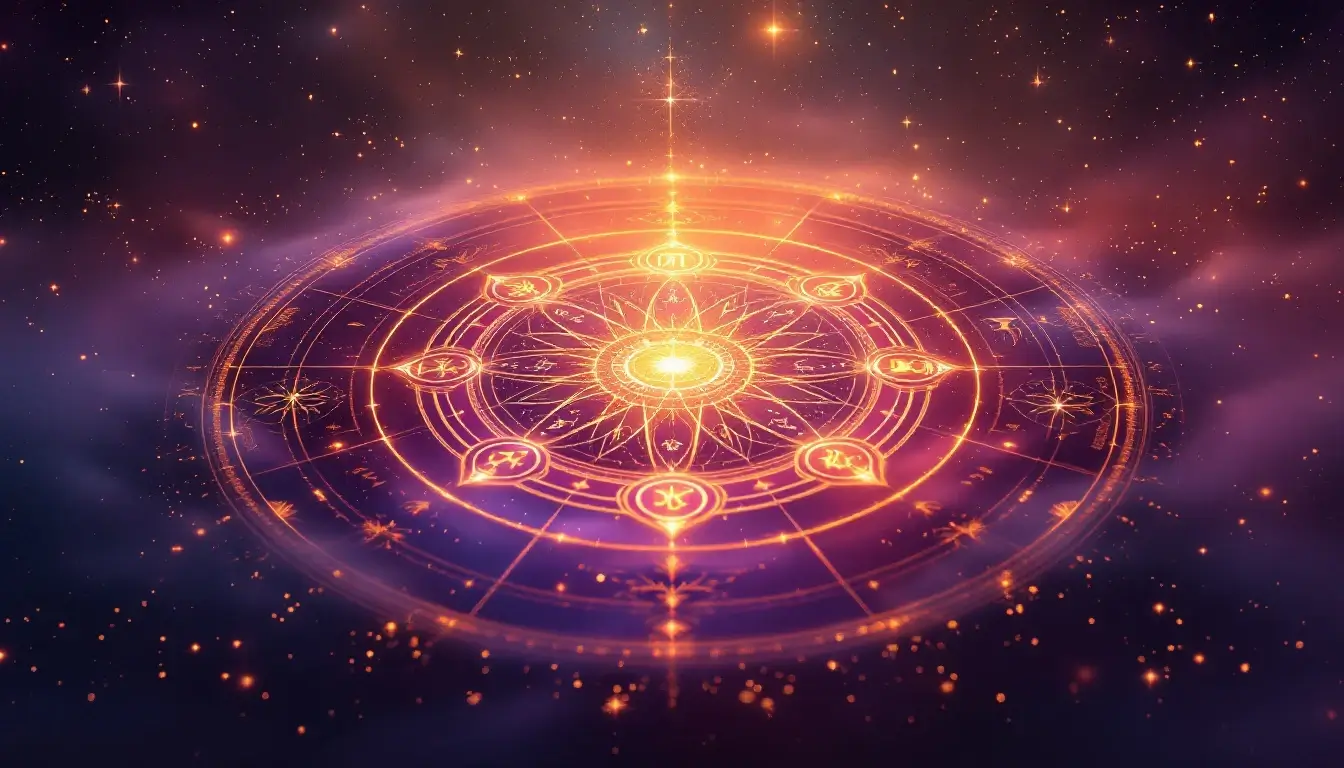
The twelve houses — or Bhavas — are the life-arena containers of your chart. The zodiac signs describe how energy expresses. The houses describe where in your life that energy shows up. Every Vedic chart has all twelve houses, and every planet lives in one of them.
The Vedic house system is very close to the Western house system, but the naming and traditional emphasis differ slightly. Here’s a plain-English cheat sheet you can keep beside your chart.
- 1st House (Tanu Bhava) — Self. Body, appearance, temperament, and the way you enter every room.
- 2nd House (Dhana Bhava) — Wealth & Voice. Money you earn, values, family lineage, and your literal speaking voice.
- 3rd House (Sahaja Bhava) — Courage & Siblings. Communication, short journeys, brothers and sisters, and the drive to act.
- 4th House (Sukha Bhava) — Home & Mother. Emotional foundation, your childhood home, your mother, and inner peace.
- 5th House (Putra Bhava) — Creativity & Children. Romance, self-expression, creative works, and children.
- 6th House (Ari Bhava) — Service & Obstacles. Work, health, daily discipline, and the enemies (external or internal) you must face.
- 7th House (Yuvati Bhava) — Partnership. Marriage, business partnerships, and open contracts of all kinds.
- 8th House (Randhra Bhava) — Transformation. Deep change, inheritance, sexuality, and the mystical unknown.
- 9th House (Dharma Bhava) — Purpose. Higher wisdom, gurus, long journeys, religion, and your soul’s calling.
- 10th House (Karma Bhava) — Career. Public status, profession, reputation, and the peak of your worldly effort.
- 11th House (Labha Bhava) — Gains & Community. Friendships, income from career, and the fulfillment of desires.
- 12th House (Vyaya Bhava) — Release. Spirituality, dreams, foreign lands, hidden losses, and the surrender that precedes rebirth.
To interpret any planet’s placement, ask two questions: which house is it in, and which sign is it in? Mars in the 10th house of Aries, for example, blasts your career with fiery ambition. Mars in the 12th house of Cancer softens into private emotional intensity that few people ever see.

Bring the Cosmos to Your Coffee Table
Our celestial coaster sets turn any quiet study session — birth chart in one hand, tea in the other — into a moment of ritual. Handcrafted, sturdy, and made for star-lovers who want their daily rhythms to feel a little more sacred.
Your Current Life Phase: Understanding Dashas

Here’s where Vedic astrology delivers something Western astrology genuinely doesn’t have: a built-in life timeline. The Vimshottari Dasha system divides your entire lifespan into planetary chapters — long phases ruled by one planet at a time. If you’ve ever wondered why your late twenties felt like a completely different life than your mid-thirties, your dasha shift probably has something to say about it.
How Dashas Work
The Vimshottari system runs on 120-year cycle. Each planet rules a specific number of years:
- Ketu: 7 years
- Venus: 20 years
- Sun: 6 years
- Moon: 10 years
- Mars: 7 years
- Rahu: 18 years
- Jupiter: 16 years
- Saturn: 19 years
- Mercury: 17 years
Which dasha you start life in depends on the nakshatra your Moon occupied at birth. From that starting point, the cycle rolls forward in a fixed sequence for the rest of your life. Your free chart calculator will show you the exact dates: “Jupiter Mahadasha 2018 to 2034” and so on. If yours doesn’t display this, switch to AstroSage — its dasha table is the most detailed of the free tools.
Reading Your Current Dasha
Find today’s date on your dasha timeline. Whichever planet is currently running is your Mahadasha lord — the ruling planet of your current major life chapter. Its themes will color the next several years of your experience.
In a Jupiter Mahadasha, life often expands — travel, teaching, marriage, higher study, growth of family and finances. In a Saturn Mahadasha, life often narrows and matures — responsibilities pile up, karmic lessons hit hard, and slow, patient effort becomes the theme. In a Venus Mahadasha, relationships, art, and pleasure take center stage. Neither planet is “good” or “bad” — every dasha delivers exactly what your soul needs to grow.
Vedic astrologers layer even more precision by tracking sub-periods within your Mahadasha (called Antardashas), each running a few months to a few years. But if you’re new to Vedic reading, start with the Mahadasha alone. Knowing which planet rules your current chapter is often enough to make sense of years of otherwise mysterious life weather.
Western vs. Vedic: When Your Sun Sign Changes (and Why That’s Okay)

This is the single most common panic point for Western readers running their first Vedic chart. You’ve been a proud Sagittarius your whole life, you finally generate your Vedic chart, and it tells you you’re a Scorpio. What just happened? Nothing bad, we promise. Let’s untangle it.
The Ayanamsa Explained (In One Paragraph)
As we mentioned in Section 1, the Western tropical zodiac is fixed to the seasons, while the Vedic sidereal zodiac is fixed to the actual stars. Because the Earth wobbles on its axis over thousands of years, the two systems have drifted apart. The measurement of that drift is called the ayanamsa. Right now, the difference is roughly 24 degrees — nearly a full sign. So if your Western Sun sits at 5 degrees Sagittarius, your Vedic Sun will land around 11 degrees Scorpio. Same planet, same birth moment, different measuring stick.
Which One Is Right?
Both are right. They’re answering different questions. Western astrology tracks your relationship to Earth’s seasons — the archetypal cycle of light and growth. Vedic astrology tracks your relationship to the actual stars overhead — the karmic cycle of destiny and evolution. Neither invalidates the other. Many modern astrologers happily read both and use each system for what it does best.
What to Do With the “Extra” Sign
Don’t scrap your Western identity. Add the Vedic layer as a second wardrobe. Your Western Sagittarius Sun tells you about your seasonal-archetypal essence — the fire, the wanderlust, the truth-seeking. Your Vedic Scorpio Sun tells you about your karmic-star inheritance — the intensity, the mystical depth, the transformative undercurrent. Both are true. Both are you. If you’d like to explore Western compatibility angles alongside your new Vedic reading, our guide to astrology compatibility by date of birth is a fun place to start.
One more soft caveat: speaking of embracing your cosmic reset, our Bespoke Celestial Horoscope Coasters make the perfect quiet-ritual companion for these kinds of deep chart-study evenings — a small, tactile reminder that the sky was always with you.
Vedic Birth Chart FAQ (Quick Answers for Curious Readers)
A few of the questions we hear most often from Western readers running their first Vedic chart. Skim the ones that speak to you.
Is a free Vedic birth chart with interpretation as accurate as a paid reading?
The raw chart itself — the planetary positions, house placements, and nakshatra — is calculated using the same astronomical math whether the tool is free or paid. So the accuracy of the data is identical. Where paid readings add value is in interpretive depth: a professional Vedic astrologer will layer divisional charts, planetary strengths, sub-period timings, and dosha analysis on top of the base chart. For learning the fundamentals, a free chart plus a good guide (like this one) is genuinely enough to get started.
Do I need my exact birth time?
Ideally, yes — down to the minute. Your rising sign (Lagna) changes roughly every two hours, so even a small time error can put you in a completely different Lagna. If you don’t have a birth time, you can still get a partial reading based on your Moon sign and nakshatra, but the house-based analysis won’t be accurate. A birth time rectification (a professional service some Vedic astrologers offer) can sometimes work backward from major life events to estimate your birth time.
What is the difference between a Vedic chart and a Kundli?
They’re the same thing. Kundli is the traditional Sanskrit word for the natal chart in Vedic astrology. Modern English-language resources often say “Vedic birth chart” for clarity, but if you see “free Kundli” or “online Kundali” on a website, it’s the identical document.
Which is better for compatibility — Western or Vedic?
Vedic astrology has a specialized system called Ashtakoot Milan (eight-point matching) that scores compatibility across categories like temperament, health, love, and progeny. It’s remarkably detailed. Western synastry offers a different but equally rich language of planet-to-planet aspects. If you’re serious about the question, learn both. Many couples find their Vedic score high and their Western synastry glowing — or vice versa — and both readings tell part of the truth.
Can Vedic astrology predict my future?
Vedic tradition treats the chart as a map of tendencies, timings, and karmic themes — not a fixed script. Free will remains central. Your dasha timeline shows you which chapter of life you’re in, but how you write that chapter is up to you. Think of Vedic astrology as a weather forecast for your soul: you still choose what to wear and where to go.
Your Next Step: What to Do With Your Chart
You now have every conceptual tool you need to read your own free Vedic birth chart with interpretation. So how do you actually use it?
Start with a slow first pass. Identify your Lagna. Identify your Rasi. Identify your birth nakshatra. Write down the current Mahadasha ruler. That’s your foundation. Come back to the chart weekly for a month and pick one house at a time to study — read the sign, note which planets are sitting there, and ask what life theme is currently activated.
Then layer Vedic reading over your Western practice. Notice how the two systems agree, and where they add different flavor. You’ll find that some life events map cleanly onto your Vedic dasha timeline in a way your Western transit calendar never quite captured. You’ll also find that some emotional textures are illuminated more sharply by your Vedic Moon sign than by your Western sun. Both lenses matter. Together, they give you depth.
If you want to go deeper still, our step-by-step birth chart reading guide and roundup of the best astrology birth chart tools pair beautifully with the Vedic foundations you’ve just laid down. Because the truth is: the sky is generous. It has always been giving you multiple ways home to yourself. All you had to do was ask.

Your Stars, Your Inbox
Get weekly horoscope insights, cosmic guidance, and exclusive offers delivered straight to your inbox. Join our community of star-seekers today.