If you’ve ever wondered why your horoscope doesn’t quite capture the full picture of who you are, a birth chart reading holds the answer. Your birth chart is far more than your Sun sign — it’s a detailed cosmic snapshot of the sky at the exact moment you took your first breath. Think of it as your personal celestial fingerprint, a map that reveals your strengths, challenges, desires, and deepest potential. Whether you’re brand new to astrology or ready to go deeper, a birth chart reading is the single most powerful step you can take toward true self-knowledge. In this guide, we’ll walk through every layer of your natal chart — from your Big Three to the stories tucked inside each house and aspect — so you can finally understand the cosmic blueprint that makes you, you.
What Is a Birth Chart Reading?

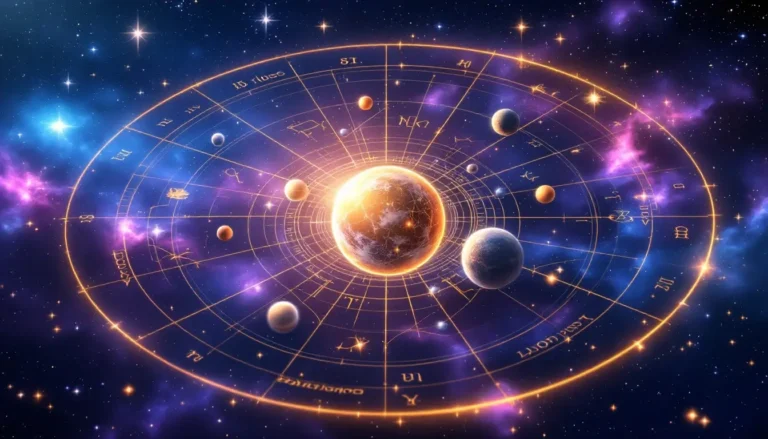
A birth chart reading — also called a natal chart reading — is an interpretation of the positions of the Sun, Moon, planets, and other celestial points at the exact time and place you were born. Imagine freezing the entire sky in that single moment: the result is a circular diagram divided into twelve sections (called houses), filled with planetary symbols and zodiac signs. Reading it is the art of translating those cosmic placements into meaningful insight about your personality, life path, and potential.
Unlike a daily horoscope, which speaks to everyone born under the same Sun sign, a birth chart reading is uniquely yours. No two charts are identical — even twins born minutes apart can have significant differences. Your chart captures the interplay of a dozen celestial bodies across twelve zodiac signs and twelve houses, creating thousands of combinations. That’s why one Aries can feel so different from another, and why a Sun-sign description might leave you thinking, “That’s only half of me.”
So what does it actually reveal? Quite a lot:
- Your core personality traits — how you think, feel, love, and act
- Your emotional landscape — what you need to feel safe and fulfilled
- Your communication style — how you process and share ideas
- Your relationship patterns — what you seek in love and how you connect
- Your career strengths — where your natural talents shine brightest
- Your growth edges — the challenges that push you toward your highest potential
Your natal chart doesn’t predict your future in a rigid way. Instead, it illuminates tendencies and potentials — the conditions you’re working with. You always hold the power to choose how you respond. That’s what makes astrology so empowering: it gives you the self-awareness to make more aligned choices.
Whether you’re exploring astrology for personal growth, relationship insight, or simple curiosity, your natal chart is the foundation everything builds on. Master this one map, and you’ll have a lifelong tool for understanding yourself and the people around you.
What You Need for Your Birth Chart Reading

Before you can interpret your chart, you need three essential pieces of information: your birth date, your exact birth time, and your birth location. All three matter, but the birth time is especially critical — and it’s the one most people struggle to find.
Your birth date determines where the Sun and slower-moving planets fall. Your birth location establishes which part of the sky was overhead. But your exact birth time is what sets the houses and your Rising sign (Ascendant) — and that changes roughly every two hours. A chart cast for 9:00 AM can look dramatically different from one cast for 11:00 AM on the same day. Even a thirty-minute difference can shift your house placements and alter the entire reading.
So where can you find your birth time? Here are the most reliable sources:
- Your birth certificate — Many long-form birth certificates include time of birth. If yours doesn’t, you can often request a copy from your county or state’s vital records office.
- Hospital records — Some hospitals keep delivery records on file for decades.
- Family members — Parents, grandparents, or older relatives may remember the time (though keep in mind memories can be approximate).
- Baby books or journals — If someone in your family kept a baby book, the time might be recorded there.
If you absolutely cannot find your birth time, you can still generate a partial chart using a noon default. You’ll lose house placements and Rising sign accuracy, but your planetary signs and many aspects will still be valid.
Once you have your three data points, generating your chart is simple. Free tools like Astro.com, Co-Star, and TimePassages will create your natal chart instantly. For a deeper, more nuanced interpretation, working with an experienced astrologer brings layers of insight that software alone can’t replicate. Either way, gathering your accurate birth data is the essential first step.
The Big Three: Your Sun, Moon, and Rising Signs

When astrologers talk about your “Big Three,” they mean your Sun sign, Moon sign, and Rising sign (Ascendant). These three placements form the cornerstone of any birth chart reading, and together they paint a far richer picture than your Sun sign alone ever could.
Your Sun Sign: The Core of Who You Are
Your Sun sign represents your core identity — your ego, your willpower, and the essence of your personality. It’s the sign most people know because it’s determined by your birth date alone. The Sun is your life force, the driving energy behind your ambitions and self-expression. If your Sun is in Leo, you naturally gravitate toward creativity and leadership. If it’s in Virgo, you’re wired for service, precision, and thoughtful analysis. Your Sun sign answers the question: Who am I at my most essential?
Your Moon Sign: Your Emotional Inner World
While the Sun shows who you are outwardly, your Moon sign reveals your emotional core — the private landscape of feelings, instincts, and needs that most people never see. Your Moon governs how you process emotions, what makes you feel safe, and what you crave in intimate relationships. Someone with a Moon in Scorpio, for example, feels everything with intense depth and needs emotional honesty above all else. A Moon in Sagittarius needs freedom, adventure, and optimism to feel emotionally balanced. Your Moon sign often unlocks why you react the way you do — especially under stress.
Your Rising Sign: The Mask You Show the World
Your Rising sign — also called your Ascendant — is the zodiac sign that was climbing over the eastern horizon at the moment you were born. It represents your outer personality, the first impression you make, and the lens through which you approach new situations. If your Sun sign is the actor, your Rising sign is the costume and stage presence. People often identify more with their Rising sign’s description than their Sun sign, especially in social settings. Your Rising sign also determines your entire house layout, making it one of the most structurally important placements in your chart.
Here’s why all three matter together: imagine someone with a Capricorn Sun, Pisces Moon, and Gemini Rising. Their core drive is ambition and structure (Capricorn), but their emotional life is deeply intuitive, dreamy, and empathetic (Pisces), and the world sees them as curious, witty, and adaptable (Gemini). Knowing only their Sun sign would miss most of the story. When you weave your Big Three together, you start to see the full, beautifully complex human that you actually are — and that’s where the magic begins.
Curious about how your Big Three interact with someone else’s? Exploring birth chart compatibility reveals the powerful dynamics between two charts.
Understanding the Planets in Your Birth Chart

Beyond your Big Three, your natal chart includes eight more celestial bodies — each one governing a different dimension of your life. Astrologers group these into three tiers based on how quickly they move through the zodiac and how personally they affect you.
Personal Planets: Mercury, Venus, and Mars
The personal planets move quickly and shape your day-to-day personality, habits, and desires.
- Mercury rules communication, thinking, and learning. Your Mercury sign reveals how you process information and make decisions. Mercury in Aquarius thinks in unconventional, big-picture terms. Mercury in Cancer communicates through emotion and memory.
- Venus governs love, beauty, values, and money. Your Venus sign shapes what you find attractive and how you express affection. Someone with Venus in Taurus craves sensual, stable love and appreciates the finer things in life. Venus in Aries falls fast and loves the chase.
- Mars drives action, ambition, desire, and anger. Your Mars sign reveals how you pursue goals and handle conflict. Mars in Scorpio is strategically relentless. Mars in Libra seeks harmony and avoids confrontation until pushed too far.
Social Planets: Jupiter and Saturn
Jupiter and Saturn move more slowly, spending one to two and a half years in each sign. They shape your broader life philosophy and relationship with responsibility.
- Jupiter is the planet of expansion, luck, wisdom, and abundance. Its sign and house placement show where life flows with more ease and where you naturally attract opportunity.
- Saturn is the planet of structure, discipline, lessons, and time. Where Saturn sits in your chart reveals your biggest life lessons and the areas where consistent, patient work builds something lasting. Saturn isn’t punishing you — it’s the strict but loving teacher who ensures you earn your success.
Generational Planets: Uranus, Neptune, and Pluto
These outer planets move so slowly that they define entire generations. Their sign placement matters less personally, but their house placement in your chart is deeply significant.
- Uranus governs revolution, innovation, and sudden change. With Uranus moving into Gemini in 2026, entire generations are experiencing shifts in how they communicate and share information. Where Uranus falls in your chart shows where you crave freedom and where breakthroughs happen.
- Neptune rules dreams, intuition, spirituality, and illusion. Its house placement shows where you’re most idealistic — and where you might need grounding to avoid getting lost in fantasy.
- Pluto embodies transformation, power, and rebirth. Wherever Pluto sits in your chart, expect deep, soul-level evolution over your lifetime. This is the planet that tears down what no longer serves you so something stronger can grow.
Together, these planets create a layered symphony in your chart. Each one adds a voice, and the magic lies in how they all blend together in your unique arrangement.
The 12 Houses: Where Your Cosmic Story Unfolds

If the planets are the what and the zodiac signs are the how, the houses are the where. Your natal chart divides the sky into twelve houses, each governing a specific area of life. The planets that land in each house color those life areas with their energy, creating the particular narrative that belongs only to you.
Here’s a quick overview of all twelve houses:
- 1st House (Self) — Your identity, appearance, first impressions, and physical vitality. This is the house of “I am.”
- 2nd House (Values) — Your finances, possessions, self-worth, and personal resources.
- 3rd House (Communication) — Your thinking style, siblings, short trips, and everyday conversations.
- 4th House (Home) — Your roots, family, emotional foundation, and private life.
- 5th House (Creativity) — Your self-expression, romance, children, joy, and creative pursuits.
- 6th House (Health) — Your daily routines, work habits, wellness, and service to others.
- 7th House (Partnerships) — Your committed relationships, marriage, business partners, and one-on-one connections.
- 8th House (Transformation) — Shared resources, intimacy, death and rebirth cycles, and deep psychological change.
- 9th House (Philosophy) — Higher education, travel, belief systems, and the search for meaning.
- 10th House (Career) — Your public reputation, career ambitions, achievements, and legacy. This is the house the world sees most clearly.
- 11th House (Community) — Friendships, social groups, hopes, dreams, and your role in the collective.
- 12th House (Spirituality) — Your subconscious, hidden strengths, solitude, and spiritual growth.
The most impactful houses tend to be the 1st House (how you show up in the world), the 7th House (who you attract and how you partner), and the 10th House (the career and reputation you build). If you have a stellium — three or more planets in any single house — that life area becomes an especially powerful theme in your story.
What makes the house system fascinating is how it personalizes everything. Two people might both have Venus in Taurus, but if one person’s Venus falls in the 2nd House and the other’s in the 10th House, their experience of love and values plays out in completely different arenas. The first channels that energy into building personal wealth, while the second expresses it through a creative public career.
Speaking of celebrating your cosmic identity, our Taurus Celestial Painting Eco Tote Bag is the perfect way to honor your sign — because your birth chart reading deserves to be worn with pride.
Understanding your houses turns your chart from a list of traits into a living narrative. It’s the difference between knowing what your strengths are and understanding where they’ll show up most powerfully in your life.
Aspects in Your Birth Chart Reading: How Planets Communicate

Once you know which planets sit in which signs and houses, the next layer is aspects — the geometric angles that planets form with each other. Aspects reveal how your planetary energies interact. Are they cooperating? Clashing? Amplifying each other? The aspects in your chart are often where the most personal, nuanced insights live.
There are five major aspects to understand:
- Conjunction (0 degrees) — Two planets right next to each other, their energies merging and intensifying. A Sun-Mercury conjunction blends your identity with your communication style, making self-expression natural and direct.
- Trine (120 degrees) — A flowing, harmonious connection. Planets in trine support each other effortlessly. A Moon trine Venus often indicates someone who loves easily and radiates warmth without even trying.
- Sextile (60 degrees) — Similar to a trine but slightly less automatic. Sextiles represent opportunities — the talent is there, but you need to actively engage it. Think of sextiles as doors that open when you knock.
- Square (90 degrees) — A tense, friction-filled angle. Squares create inner conflict between two planetary drives that don’t naturally align. A Mars square Saturn might feel like constantly hitting the brakes on your ambition. But here’s the truth: squares are your greatest engines of growth. The tension demands action and builds resilience.
- Opposition (180 degrees) — Two planets directly across the chart from each other, creating a push-pull dynamic. A Venus-Pluto opposition might swing between craving consuming love and fearing vulnerability — but integrating both sides leads to profound emotional strength.
Here’s what matters most: there are no “bad” aspects. Squares and oppositions aren’t curses. They’re the places where you’re being asked to grow, adapt, and develop mastery. Many of the most successful people have charts loaded with challenging aspects. Those tensions become their fuel.
Conversely, a chart full of only trines and sextiles can indicate someone with natural talent who struggles with motivation — because nothing pushes them beyond their comfort zone. The most dynamic charts reveal a mix of harmony and challenge, and that balanced tension is exactly what makes a life rich and purposeful.

Wear Your Cosmic Identity
Celebrate Taurus season with our celestial eco tote bag — grounded, elegant, and as beautifully steadfast as the bull itself. Perfect for carrying your cosmic essentials in style.
Frequently Asked Questions About Birth Chart Readings

Can my birth chart change?
No — your birth chart is a fixed snapshot of the sky at the moment you were born, and it never changes. What does change is the sky itself. Astrologers track ongoing planetary movements (called transits) and compare them to your natal chart to understand current themes and challenges. While your blueprint stays the same, the cosmic weather passing over it always shifts — which is why the same person can experience wildly different years.
What if I don’t know my birth time?
You can still gain valuable insight without an exact birth time. Your planetary signs — including your Sun, Moon (within a range), Mercury, Venus, Mars, and the outer planets — remain accurate based on your birth date alone. What you’ll lose is your Rising sign, precise Moon degree, and house placements. Some astrologers offer a technique called chart rectification, where they work backward from major life events to estimate your likely birth time. It’s not perfectly exact, but it can get surprisingly close.
How often should I get a birth chart reading?
Your natal chart only needs to be read in depth once — it doesn’t change, after all. However, many people benefit from annual transit readings (often called solar return readings) that examine the planetary weather for their upcoming birthday year. Others seek readings during major life transitions — a career shift, a new relationship, a big move — to understand the cosmic currents supporting them. Think of your initial reading as the foundation, and transit readings as the seasonal updates that keep you aligned.
What’s the difference between a birth chart and a horoscope?
A horoscope is a generalized forecast based on your Sun sign (and sometimes your Rising sign). It applies broadly to everyone born under that sign during a given period. A birth chart reading is entirely personal — it uses your exact birth date, time, and location to map the precise positions of every celestial body at your moment of birth. The difference is like reading a weather forecast for your entire country versus checking the microclimate for your exact neighborhood. Both serve a purpose, but your natal chart delivers a level of specificity that a horoscope simply can’t match. Even the lunar cycles that influence your chart take on deeply personal meaning — much like understanding the significance of a blue moon adds layers to your awareness of celestial timing.
Your Cosmic Blueprint Awaits

Your birth chart reading is more than an astrology exercise — it’s an invitation to meet yourself on the deepest level. Every planet, sign, house, and aspect in your chart is a thread in the tapestry of who you are. Some threads are golden and effortless. Others are taut with tension. Together, they create something extraordinary: a portrait of a soul with purpose, potential, and a story that is entirely its own.
The beauty of understanding your cosmic blueprint is that it doesn’t limit you — it liberates you. When you see your patterns clearly, you stop fighting against your nature and start working with it. You understand why certain relationships feel magnetic and others draining. You recognize why some career paths light you up while others leave you hollow. You gain compassion for your struggles because you can see them as growth edges, not flaws.
If you’ve read this far, you’re ready. Pull up your birth chart — use a free tool, download an app, or book a session with a professional astrologer — and start exploring. Begin with your Big Three, then work outward to your personal planets, your houses, and finally your aspects. Take it one layer at a time. Your chart has waited your whole life for you to read it, and it will reward every moment of attention you give it.
The stars mapped something extraordinary the moment you arrived. Now it’s your turn to discover what they had to say.

Your Stars, Your Inbox
Get weekly horoscope insights, cosmic guidance, and exclusive offers delivered straight to your inbox. Join our community of star-seekers today.