If you’ve ever taken a quiz for your Vedic astrology signs and landed on a completely different answer than the sun sign printed on your coffee mug, you haven’t broken the internet’s astrology calculator. Vedic astrology — also called Jyotish, “the science of light” — measures the zodiac from a different starting point in the sky than Western astrology does, which means your Vedic sign is very often the sign before the one you’ve always claimed. A lifelong Scorpio might discover she’s actually a Libra in the Vedic system. A proud Leo might find out he’s really a Cancer.
None of this means your birth chart is wrong. It means there are two legitimate, centuries-old ways of mapping the same sky, and each one tells you something different about who you are. In this guide, we’ll walk through what Vedic astrology signs actually are, introduce you to all 12 rashis by their real Sanskrit names, show you how to find your own Vedic sign, and break down what each one means for your personality — plus the key differences between the Vedic and Western systems that go far beyond just your sun sign.
What Are Vedic Astrology Signs? Sidereal vs. Tropical, Explained
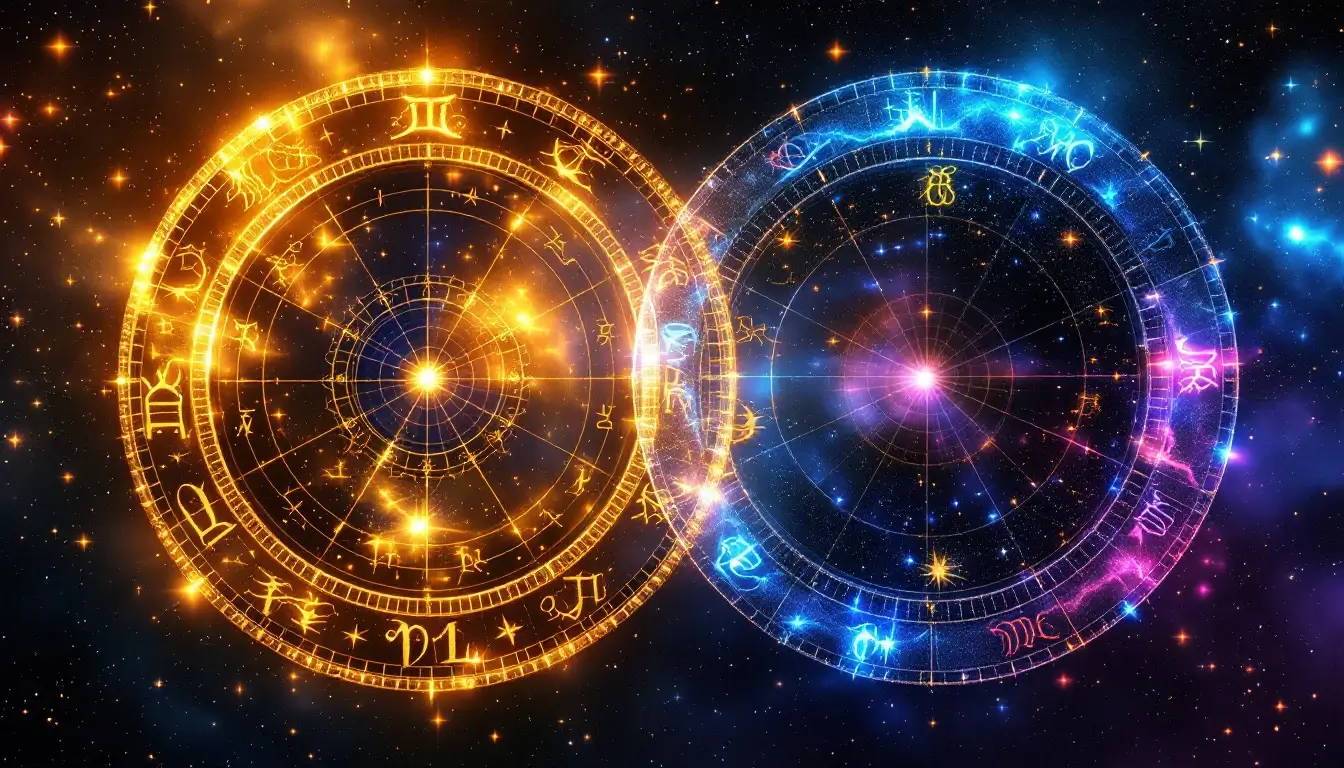
Both Western and Vedic astrology use the same 12 zodiac signs — Aries through Pisces — and both track the same planets moving through the same houses. What separates them is the reference point each system uses to measure where those signs actually begin and end in the sky.
Western astrology uses the tropical zodiac, which is anchored to the seasons. It defines 0° Aries as the exact moment of the spring equinox, every single year, regardless of where the actual constellation of Aries happens to be sitting in the sky. Vedic astrology uses the sidereal zodiac, which is anchored to the fixed background of stars themselves — the actual constellations, as an ancient astronomer would have pointed to them overhead.
Here’s the catch: because of a slow wobble in Earth’s axis called the precession of the equinoxes, these two reference points have been drifting apart for over 2,000 years. Right now, the gap between them — astrologers call it the ayanamsa — is about 24 degrees, which is nearly a full zodiac sign’s worth of sky. That’s the entire reason your Vedic astrology sign can look so different from your Western one: it’s not a different sky, it’s a different ruler laid across the same sky.
Neither system is “more correct” than the other. Tropical astrology is a language of seasons and psychological archetypes. Sidereal astrology is a language of literal star placement and karmic pattern. Learning your Vedic astrology sign doesn’t cancel out your Western chart — it adds a second, deeper layer to it.
Both traditions actually share the same ancient root. Roughly 2,000 years ago, the tropical and sidereal zodiacs lined up almost exactly — 0° Aries and the spring equinox sat in nearly the same spot. Western astrology froze its zodiac to that seasonal starting point and never moved it again, which is why it’s sometimes called a “moving” zodiac relative to the stars. Vedic astrology, rooted in the Jyotisha tradition described in ancient Sanskrit texts, chose to keep tracking the actual, physical constellations instead, letting the “start line” of Aries drift along with the real sky. Two thousand years of that slow precession is exactly what produced today’s roughly 24-degree ayanamsa gap — and it’s still growing by about 1 degree every 72 years.
The 12 Vedic Astrology Signs (Rashis): Names, Symbols & Ruling Planets
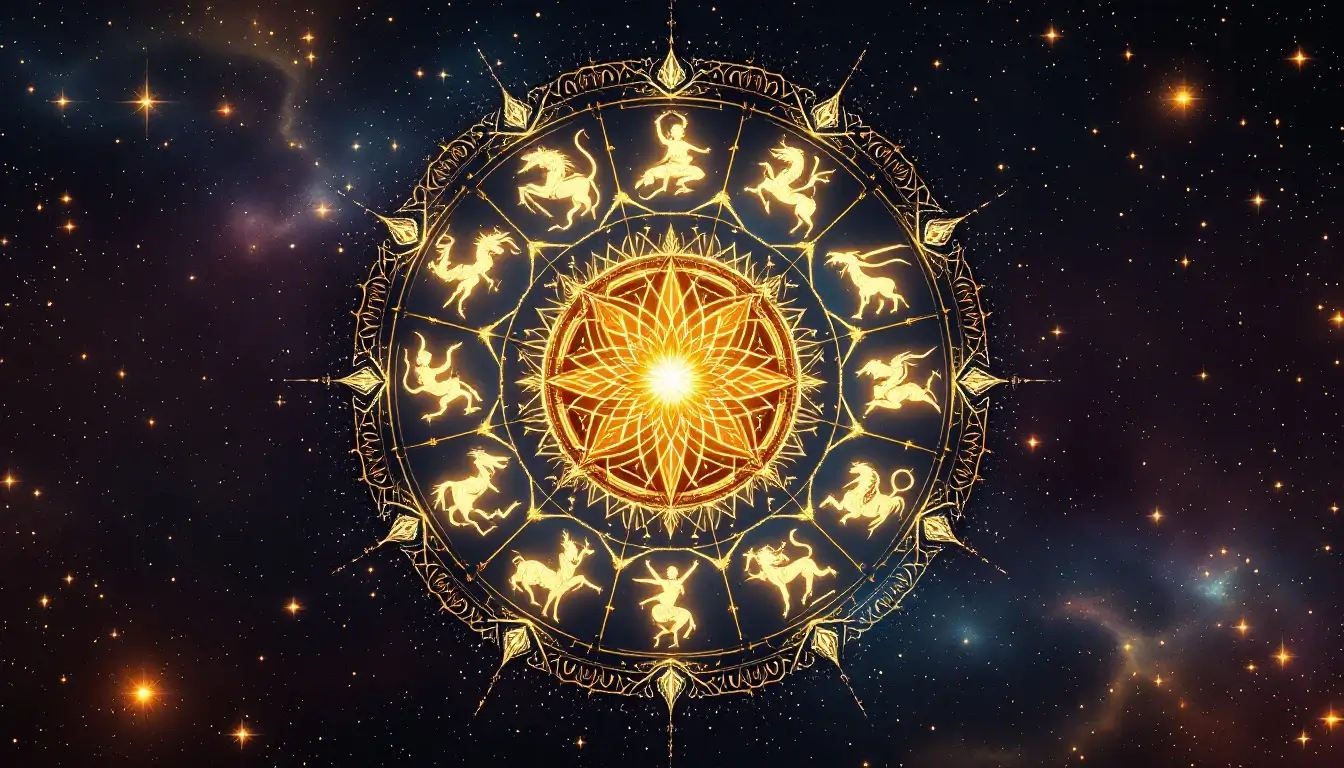
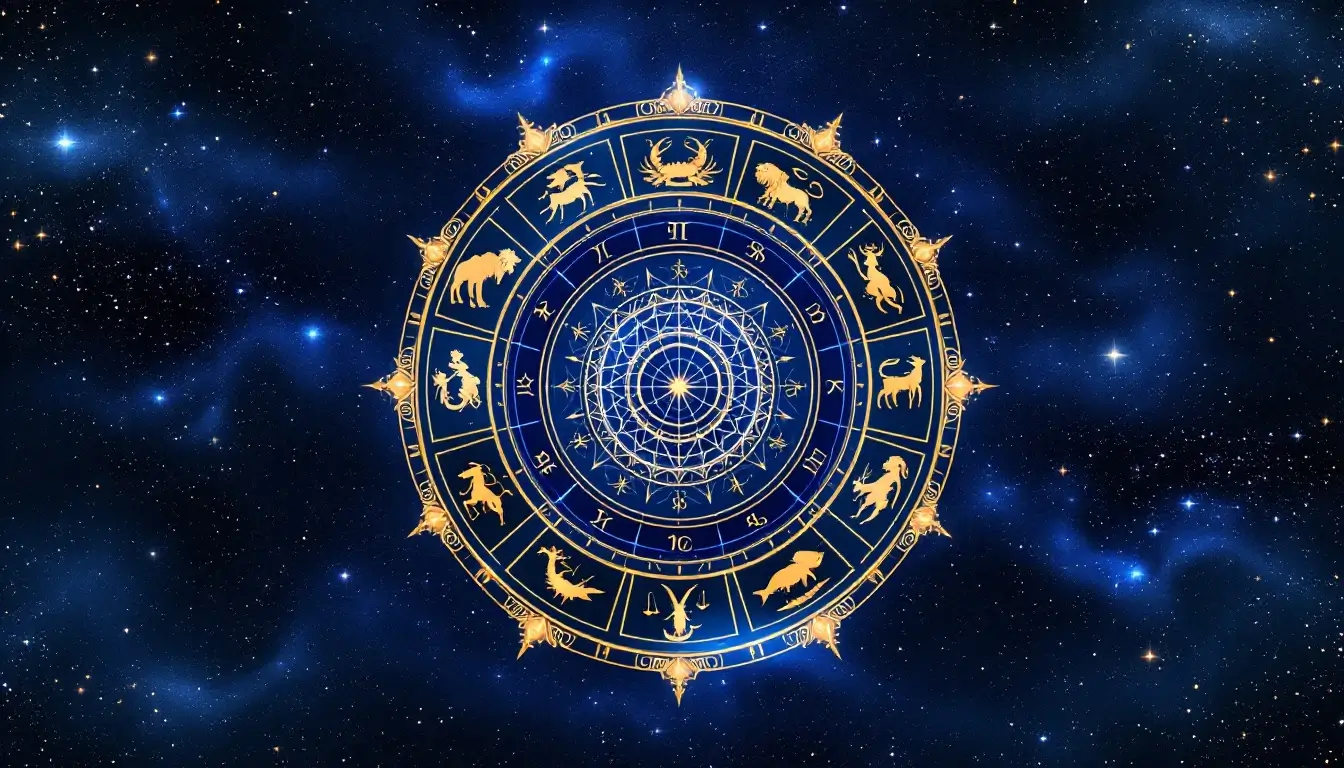
In Sanskrit, a zodiac sign is called a rashi, which literally translates to “heap” or “portion” — as in, a 30-degree portion of the sidereal zodiac wheel. Each rashi carries the same symbol and ruling planet as its Western counterpart, but its own Sanskrit name and its own distinct flavor within the Vedic tradition.
| Western Sign | Rashi (Sanskrit) | Symbol | Element | Ruling Planet |
|---|---|---|---|---|
| Aries | Mesha | Ram | Fire | Mars |
| Taurus | Vrishabha | Bull | Earth | Venus |
| Gemini | Mithuna | Twins | Air | Mercury |
| Cancer | Karka | Crab | Water | Moon |
| Leo | Simha | Lion | Fire | Sun |
| Virgo | Kanya | Maiden | Earth | Mercury |
| Libra | Tula | Scales | Air | Venus |
| Scorpio | Vrishchika | Scorpion | Water | Mars |
| Sagittarius | Dhanu | Archer | Fire | Jupiter |
| Capricorn | Makara | Sea-Goat | Earth | Saturn |
| Aquarius | Kumbha | Water-Bearer | Air | Saturn |
| Pisces | Meena | Fish | Water | Jupiter |
Notice that the elements, symbols, and ruling planets line up exactly with their Western counterparts — a Vedic Simha (Leo) is just as fire-driven and sun-ruled as a Western Leo. What changes isn’t the archetype itself; it’s which calendar dates that archetype’s energy actually falls under, since the rashi boundaries sit roughly 24 degrees “earlier” in the sky than tropical sign boundaries.
How to Find Your Vedic Astrology Sign

Because of that 24-degree ayanamsa gap, you can’t just use your Western birthday to guess your Vedic astrology sign — you actually need your sidereal moon and sun placements calculated against your exact birth date, time, and location. As a rule of thumb, most people land one full sign “behind” their Western sun sign, though the exact cutoff dates shift slightly every year. Here’s the quick-reference version:
| Western Sun Sign | Typical Vedic Rashi |
|---|---|
| Aries | Meena (Pisces) |
| Taurus | Mesha (Aries) |
| Gemini | Vrishabha (Taurus) |
| Cancer | Mithuna (Gemini) |
| Leo | Karka (Cancer) |
| Virgo | Simha (Leo) |
| Libra | Kanya (Virgo) |
| Scorpio | Tula (Libra) |
| Sagittarius | Vrishchika (Scorpio) |
| Capricorn | Dhanu (Sagittarius) |
| Aquarius | Makara (Capricorn) |
| Pisces | Kumbha (Aquarius) |
If you were born in the last few days of your Western sign’s date range, there’s a real chance you’ll land on the same rashi rather than shift back — the exact ayanamsa boundary depends on the year and the specific calculation method (Lahiri ayanamsa is the most widely used). The only fully accurate way to know your rashi is to run your exact birth data through a sidereal calculator. For a deeper walkthrough of the full sidereal chart — not just your sun sign, but your moon, rising, houses, and nakshatra — our complete guide to reading your Vedic astrology birth chart is the natural next stop, and our free Vedic birth chart walkthrough will calculate it for you in about 20 minutes. If you want to see how your tropical dates compare side-by-side first, check our zodiac signs by month and date guide.
Vedic Zodiac Sign Personality Traits, Sign by Sign
While the core archetype of each rashi echoes its Western counterpart, Vedic astrology places more weight on the ruling planet’s classical significations and the sign’s role in the karmic cycle. Here’s a quick-reference on what each Vedic astrology sign is known for:
- Mesha (Aries): The initiator. Bold, competitive, quick to act, ruled by war-planet Mars — Vedic tradition sees Mesha as the “seed” sign that starts every new cycle. In career readings, Mesha placements are pushed toward pioneering roles rather than maintaining what already exists.
- Vrishabha (Taurus): The builder. Grounded, sensual, deeply loyal, ruled by Venus — prized in Vedic astrology for patience and material stability. Classical texts link strong Vrishabha placements to wealth accumulation and a love of comfort.
- Mithuna (Gemini): The communicator. Curious, adaptable, quick-witted, Mercury-ruled — associated with duality and the constant exchange of ideas. Vedic astrologers often look here for talent in writing, teaching, and commerce.
- Karka (Cancer): The nurturer. Moon-ruled, intuitive, protective of home and lineage — Vedic astrology treats the Moon sign as arguably more important than the sun sign for emotional character, since it moves fast enough to reflect your moment-to-moment temperament.
- Simha (Leo): The sovereign. Sun-ruled, proud, generous, natural leadership energy — associated with authority, vitality, and the soul’s core identity (the Sun, in Vedic astrology, represents the atman, or true self).
- Kanya (Virgo): The analyst. Mercury-ruled, meticulous, service-oriented — valued in Vedic tradition for discernment and practical wisdom, and often read as the sign of skilled healers and craftspeople.
- Tula (Libra): The diplomat. Venus-ruled, harmony-seeking, relationship-focused — governs partnership, fairness, and aesthetic sense, and is traditionally considered the sign most concerned with balance in every area of life.
- Vrishchika (Scorpio): The transformer. Mars-ruled, intense, deeply private — connected to death/rebirth cycles, healing, and hidden knowledge; classical Jyotish treats Vrishchika as a sign of profound resilience through crisis.
- Dhanu (Sagittarius): The seeker. Jupiter-ruled, philosophical, freedom-loving — associated with higher learning, dharma, and long-distance journeys, both literal travel and the inner journey toward meaning.
- Makara (Capricorn): The strategist. Saturn-ruled, disciplined, ambitious — governs career, structure, and long-term karmic responsibility, often read as the sign that “earns” its rewards slowly and permanently.
- Kumbha (Aquarius): The reformer. Saturn-ruled, independent, humanitarian — linked to community, innovation, and detachment from ego, with a classical association to unconventional thinking well ahead of its time.
- Meena (Pisces): The mystic. Jupiter-ruled, compassionate, spiritually attuned — considered the most karmically “complete” sign, closing the zodiac cycle and carrying echoes of every sign that came before it.
One fun way to actually live your rashi rather than just read about it: our Laser Engraved Virgo Horoscope Wineglass makes a genuinely sweet gift (or self-gift) for anyone who just found out their sun sign and their rashi don’t match — pour a glass for whichever sign feels more like “you” tonight.
Vedic vs. Western Astrology: What Else Is Different
The shifted sign dates get all the attention, but the ayanamsa gap is really just the entry point into two systems that approach the sky quite differently overall:
The Moon Matters More in Vedic Astrology
Western astrology leans heavily on your sun sign as the headline of your personality. Vedic astrology puts the moon sign (Rashi) at the center instead — your Vedic moon sign is traditionally treated as more revealing of your emotional nature and daily temperament than your sun sign is.
Nakshatras: The 27 Lunar Mansions
Vedic astrology divides the zodiac into 27 nakshatras, or lunar mansions, each roughly 13°20′ wide, layered on top of the 12 rashis. Your nakshatra adds a much more granular signature than your sign alone — two people with the same rashi can have very different nakshatras, and therefore quite different personalities.
Dashas: Vedic Astrology’s Predictive Timeline
Where Western astrology tends to use transits and progressions to forecast the future, Vedic astrology relies heavily on the Vimshottari Dasha system — a sequence of planetary “ruling periods,” each lasting years, that maps out which planet’s themes are dominant in your life at any given time.
A Karmic, Rather Than Purely Psychological, Lens
Western astrology today is often read psychologically — as a mirror for personality and self-understanding. Vedic astrology retains a stronger karmic framework, treating the birth chart as a map of unfinished business carried from past lives, meant to be worked through rather than simply described.
Retrogrades Are Read More Literally
Western astrology tends to treat retrograde planets as symbolic invitations to slow down, review, and revisit — think Mercury retrograde season and its running jokes about miscommunication. Vedic astrology takes retrograde (vakri) planets more literally as a shift in the planet’s strength and behavior in the chart, sometimes even treating a retrograde planet as more powerful, not weaker, depending on its placement.
Remedial Measures Are Built Into the System
Perhaps the biggest practical difference: Vedic astrology comes with an entire tradition of upayes, or remedial measures — gemstones, mantras, charitable acts, and specific rituals prescribed to soften a difficult planetary placement. Western astrology, by contrast, rarely prescribes “remedies” in this structured way; it’s generally used to explain and understand rather than to actively counterbalance.

Show Off Your Sign — Whichever One Feels Right
Whether you’re claiming your Western sun sign or your newly discovered rashi, our Virgo Horoscope Star Sign Mousepad is a small daily reminder of your cosmic identity — durable, detailed, and made for desks that could use a little more mysticism.
Frequently Asked Questions About Vedic Astrology Signs

Is my Vedic astrology sign more accurate than my Western sign?
Neither is more “accurate” — they’re two different measuring systems answering two different questions. Your Western tropical sign reflects your relationship to the seasons; your Vedic sidereal sign reflects the literal constellation the sun (or moon) was in front of at your birth. Many astrologers who work with both traditions read them as complementary layers, not competing answers.
Why is my Vedic moon sign considered more important than my sun sign?
Vedic astrology has historically emphasized the moon because it moves through a sign roughly every 2.5 days, making it a far more personal, fast-moving marker of emotional temperament than the sun, which only shifts signs once a month. Your Vedic moon sign (Rashi) is often used as the anchor point for your entire chart.
Do I need my exact birth time to find my Vedic astrology sign?
You don’t need an exact time to find your Vedic sun sign, since the sun only moves about 1 degree per day. But you do need an accurate birth time to find your Vedic moon sign and rising sign, since the moon can change signs within a single day.
What is the ayanamsa, and which one should I use?
The ayanamsa is the calculated gap between the tropical and sidereal zodiacs, currently about 24 degrees. The Lahiri ayanamsa is the most widely used standard, adopted by the Indian government’s own calendar authority, and it’s the default in most reputable Vedic astrology calculators.
Can my Vedic astrology sign be the same as my Western sign?
Yes — if you were born very close to the edge of your Western sign’s date range, the roughly 24-degree ayanamsa shift can land you back in the same rashi rather than the “previous” one. This is why an exact calculation always beats a rule-of-thumb estimate.
Is Vedic astrology the same thing as Hindu astrology or Jyotish?
Yes — “Vedic astrology,” “Hindu astrology,” and “Jyotish” all refer to the same sidereal tradition rooted in ancient Indian texts. “Jyotish” is simply the original Sanskrit term, meaning “science of light,” while “Vedic astrology” is the more common English name used internationally.
Which came first, Vedic or Western astrology?
Both trace back to shared Babylonian astronomical roots several thousand years ago, but they developed into distinct systems on separate continents. Vedic astrology was formalized in Sanskrit texts in ancient India, while Western astrology developed through Greek, Egyptian, and later European scholarship — and the two didn’t meaningfully diverge into “sidereal vs. tropical” until Western astrology fixed its zodiac to the equinox roughly 2,000 years ago.
Final Thoughts: Your Vedic Sign Is Another Layer of Your Cosmic Story

Discovering your Vedic astrology sign isn’t about replacing the chart you already know — it’s about adding depth to it. The rashi that rules your moon, the nakshatra that shapes your instincts, the dasha period you’re currently living through: these are all additional lenses for understanding a self that’s always been more layered than one symbol on a birthday card. Whichever sign you lead with when you introduce yourself at a party, know that the sky was writing at least two stories about you the moment you were born — and both of them are worth reading.

Your Stars, Your Inbox
Get weekly horoscope insights, cosmic guidance, and exclusive offers delivered straight to your inbox. Join our community of star-seekers today.