The fall equinox is one of only two moments each year when the Sun crosses Earth’s celestial equator, casting nearly equal light on both hemispheres and marking the official first day of autumn in the north. In 2026 that celestial handoff happens on Tuesday, September 22 at 8:04 p.m. EDT (00:06 UTC on September 23) — a single instant felt around the whole planet at once.
But the fall equinox is so much more than a date on the calendar. It is an astronomical event, an astrological ingress, a spiritual threshold, and one of humanity’s oldest reasons to gather in gratitude. In this complete guide you’ll learn exactly what the fall equinox is, why it happens, when it lands each year, what it means when the Sun steps into Libra, how ancient cultures honored it, and how you can meet this cosmic turning point with intention.
What Is the Fall Equinox? A Simple Definition
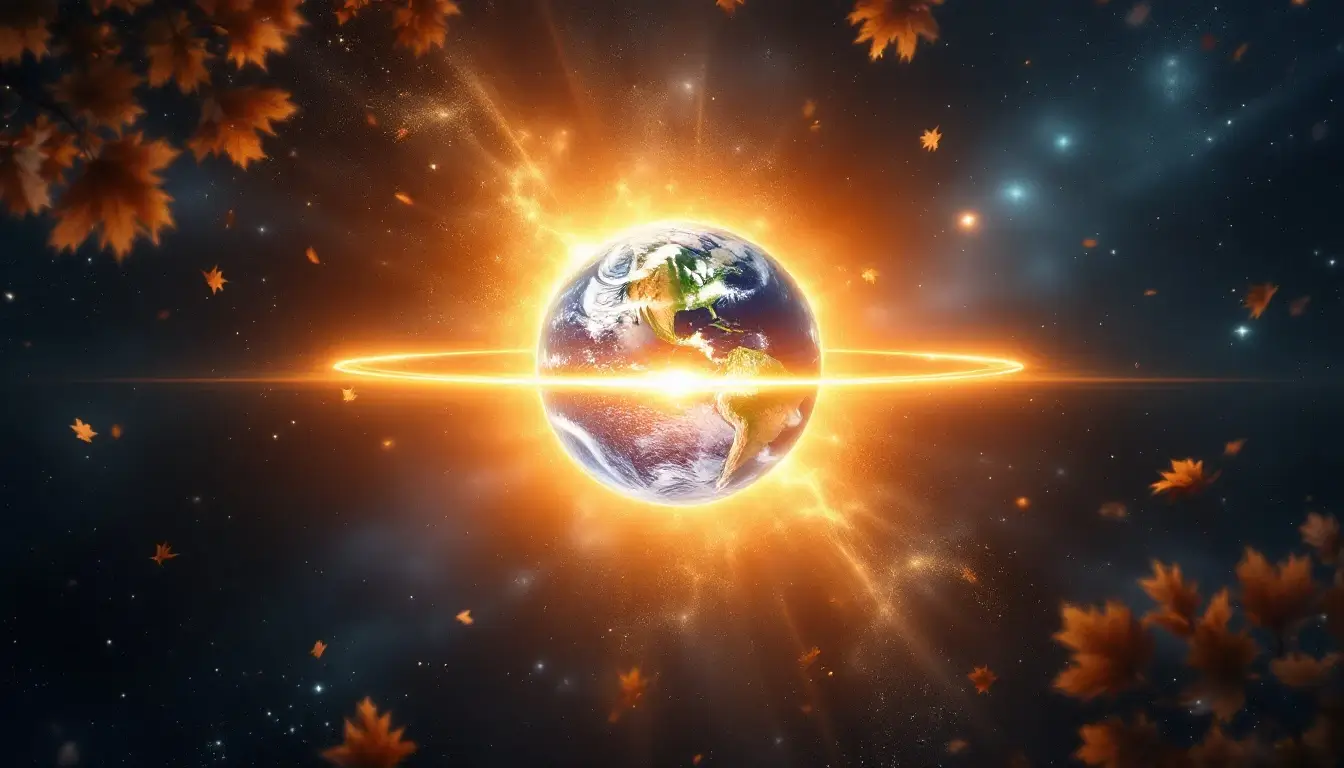
The word equinox comes from the Latin aequus (“equal”) and nox (“night”). At its simplest, the fall equinox is the precise moment when the Sun, on its yearly path across our sky, crosses the celestial equator moving from north to south. On this day, the Sun rises almost due east and sets almost due west, and every point on Earth receives roughly twelve hours of daylight and twelve hours of darkness.
There are two equinoxes each year — one in March (the spring or vernal equinox) and one in September (the fall or autumnal equinox). In the Northern Hemisphere, the September equinox marks the beginning of astronomical autumn. In the Southern Hemisphere, the very same instant marks the beginning of spring. It’s one cosmic event, two beautifully opposite experiences.
The fall equinox is also called the autumnal equinox, the September equinox, or simply the first day of fall. Astronomers define it with mathematical precision: it’s the moment the Sun’s geocentric ecliptic longitude reaches exactly 180°. Astrologers describe the same instant as the Sun’s ingress into 0° Libra. Same moment, different language.
Equinox vs. Solstice: What’s the Difference?
The two equinoxes and two solstices divide the year into four astronomical seasons. On the equinoxes, day and night are balanced. On the summer solstice, the Sun reaches its highest point and daylight peaks. On the winter solstice, the Sun sits lowest and daylight shrinks to its shortest. Where solstices are extremes, equinoxes are pivots — the great hinges on which the year swings from one season into the next.
When Is the Fall Equinox in 2026? (And Every Year After)
The fall equinox in 2026 falls on Tuesday, September 22, 2026, at 8:04 p.m. Eastern Daylight Time. That’s a single instant, so every time zone experiences it at a different local clock time. Here’s the same moment translated around the world:
- Los Angeles (PDT): Tuesday, September 22 at 5:04 p.m.
- New York (EDT): Tuesday, September 22 at 8:04 p.m.
- London (BST): Wednesday, September 23 at 1:04 a.m.
- Berlin (CEST): Wednesday, September 23 at 2:04 a.m.
- Sydney (AEST): Wednesday, September 23 at 10:04 a.m.
- Tokyo (JST): Wednesday, September 23 at 9:04 a.m.
- Bali (WITA): Wednesday, September 23 at 8:04 a.m.
If you want a full breakdown of what that moment activates in every zodiac sign, our companion piece on the Fall Equinox 2026: Exact Time and Astrology for Every Sign dives into the personal impact of this ingress.
Why Doesn’t the Fall Equinox Land on the Same Day Every Year?
The fall equinox drifts between September 21, 22, 23, and (very rarely) 24. This happens because Earth’s orbit around the Sun takes approximately 365.25 days — not a tidy 365. The Gregorian calendar corrects for that extra quarter-day by adding a leap day every four years, which nudges the equinox earlier and later within a two-day window.
Here’s when the fall equinox lands in the next several years (UTC):
- 2026: September 23, 00:06 UTC
- 2027: September 23, 06:02 UTC
- 2028: September 22, 11:45 UTC
- 2029: September 22, 17:38 UTC
- 2030: September 22, 23:27 UTC
The Astronomy Behind the Fall Equinox: Why It Happens
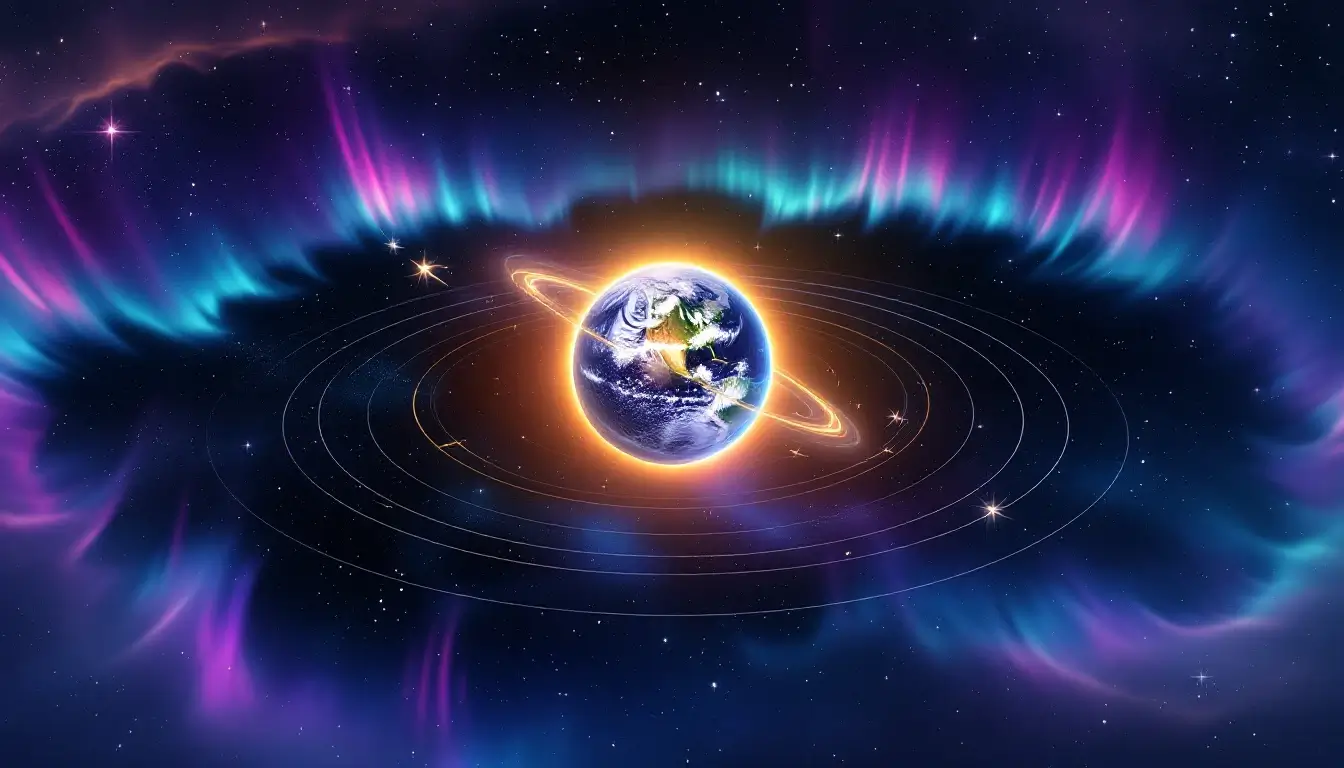
To understand the fall equinox, you have to picture Earth in motion. Our planet spins on an invisible axis that is tilted 23.5 degrees relative to the plane of its orbit around the Sun. That single tilt is the reason we have seasons at all. If Earth spun perfectly upright, every place on the planet would receive the same amount of sunlight every day of the year, and seasons wouldn’t exist.
Because of the tilt, as Earth journeys around the Sun each year, the Northern and Southern Hemispheres take turns leaning toward or away from our star. When the north tilts toward the Sun, that hemisphere receives more direct light — summer. When it tilts away, it receives less — winter. The equinoxes are the two moments in the orbit when neither hemisphere is tilted toward or away from the Sun. The tilt itself never changes; it’s Earth’s position along its orbit that shifts what part of the planet the tilt is pointing at.
At the fall equinox specifically, the Sun’s direct rays are striking Earth’s equator. Both hemispheres are lit equally. From this moment on, the Sun’s direct light will slide south of the equator, favoring the Southern Hemisphere for the next six months. That’s why days get shorter and colder in the north from the September equinox onward — Earth isn’t moving farther from the Sun; the light is just aimed elsewhere.
Is Day and Night Really Equal on the Equinox?
Almost — but not quite. On the exact equinox, the geometric center of the Sun spends approximately twelve hours above the horizon. But because our atmosphere bends sunlight (refraction), and because we measure sunrise and sunset from the Sun’s edge rather than its center, most locations actually get a few extra minutes of daylight on the equinox itself. The true 12-hour day, called the equilux, arrives a few days after the September equinox and a few days before the March equinox, depending on your latitude.
The Astrological Meaning of the Fall Equinox: Sun Enters Libra
In astrology, the fall equinox is inseparable from one specific event: the Sun’s ingress into Libra. The instant the Sun crosses the celestial equator is also the instant it enters 0° Libra — the sign of the scales. This is one of the most beautiful moments in the astrological year, because the astronomy and the symbolism agree perfectly. The sky is in balance, and the sign that rules balance takes the throne.
Libra is a cardinal air sign, ruled by Venus. Cardinal signs initiate new seasons: Aries opens spring, Cancer opens summer, Libra opens fall, and Capricorn opens winter. Each cardinal ingress is a starting gun. When the Sun steps into Libra, it invites us to shift our attention from the fiery, self-focused expression of late summer’s Leo and the analytical polish of Virgo into a season that is fundamentally about relationship: to other people, to fairness, to beauty, and to the quiet art of finding the middle path.
Libra season asks a set of questions worth sitting with. Where in your life is the scale tipping too far one way? Which relationships need re-balancing? Where have you been giving too much, or asking too much? What agreements need renegotiating now that the light is changing? The fall equinox is nature’s own reset — a permission slip to answer honestly. If you love wearing your sign’s energy while you do the work, our Cute Libra Girl Constellation T-Shirt is a lovely way to carry a little Venusian magic through the season.
What the Sun in Libra Means for Every Sign
Every zodiac sign feels the Libra ingress differently depending on which house Libra rules in your birth chart. Broadly: cardinal signs (Aries, Cancer, Libra, Capricorn) feel the biggest shift in tempo. Air signs (Gemini, Libra, Aquarius) get an energetic lift. Fire signs (Aries, Leo, Sagittarius) are asked to soften and consult others. Earth and water signs are gently invited to prioritize partnership, beauty, and emotional diplomacy. If you’d like to see exactly how this transit lands for you, our Venus in Libra guide pairs beautifully with the Sun’s own Libra journey.
Ancient Cultures & Modern Traditions That Honor the Fall Equinox
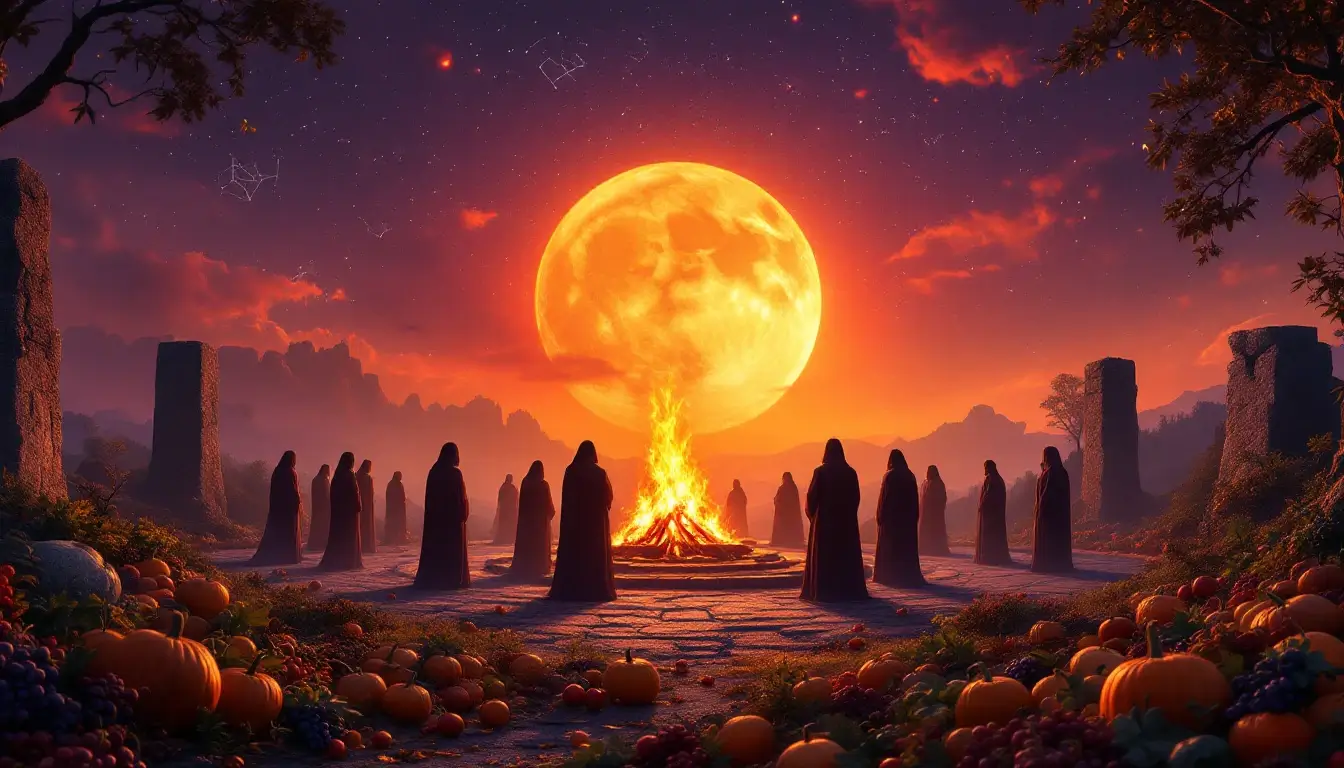
Humans have been reading the sky at this moment for thousands of years. Long before modern astronomy explained why the light was shifting, our ancestors watched the harvest ripen, the days shorten, and the stars change — and built rituals to mark the passage. Nearly every ancient culture held some form of fall equinox observance, and many of those traditions are still alive today.
Mabon is the modern Wiccan and neo-pagan festival celebrated at the autumnal equinox. Named for a Welsh mythological figure, Mabon honors the second harvest — the fruits, grains, and gourds that sustain communities through the darker months. It’s a festival of gratitude and balance, celebrated with feasts, altars stacked with autumn produce, and rituals that honor both the light gathered and the dark to come.
Chuseok, one of Korea’s most important holidays, is celebrated on the 15th day of the 8th lunar month — usually landing right around the September equinox. Families travel home, share songpyeon (crescent-shaped rice cakes), and honor their ancestors with elaborate meals.
The Mid-Autumn Festival in China, Vietnam, and across the Chinese diaspora is another equinox-adjacent celebration. Under the full harvest moon nearest the equinox, families gather to eat mooncakes, light lanterns, and give thanks for the year’s abundance.
Higan is a Buddhist observance in Japan celebrated on both equinoxes. The word means “the other shore,” reflecting the belief that during the balanced days of the equinox, the boundary between this world and the next is thinnest. Families visit graves, clean ancestral shrines, and offer prayers for the departed.
At Chichén Itzá in Mexico, the Maya built the pyramid of Kukulkan so precisely that on the equinoxes, the setting sun casts a shadow along the northern staircase that appears to be an enormous serpent slithering down the pyramid. Thousands still gather each September to witness this thousand-year-old light show.
Michaelmas, the Christian feast of Saint Michael the Archangel on September 29, absorbed many pre-Christian equinox harvest customs across Europe — including feasting on goose, baking special breads, and marking the beginning of a new quarter of the year.
What these traditions share is a shared recognition: the equinox is a threshold. Something is ending. Something is beginning. It’s a good time to gather, to give thanks, and to acknowledge the turning of the wheel.
Fall Equinox Rituals: How to Celebrate the Turning of the Season
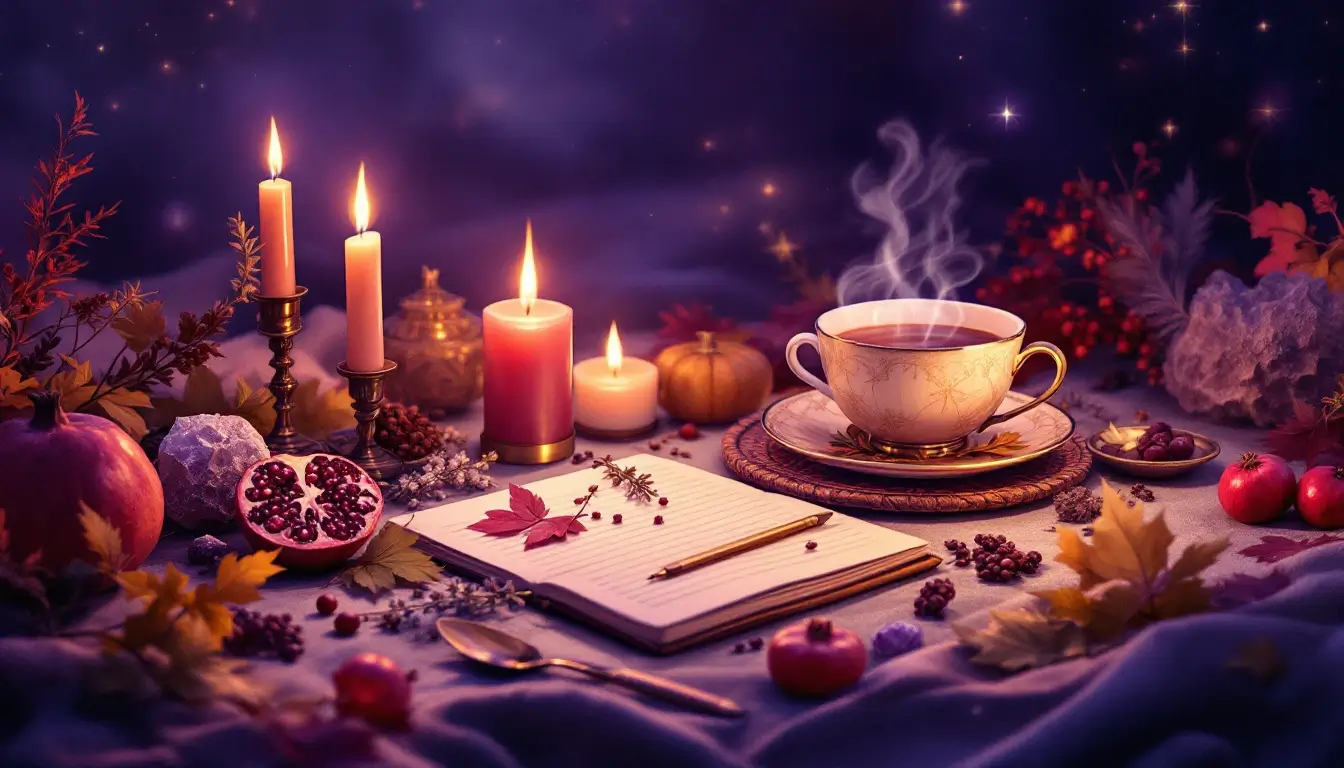
You don’t need a specific tradition, a stone circle, or a coven to mark the fall equinox meaningfully. Some of the most powerful rituals are quiet, personal, and take less than an hour. Here are five simple ways to honor this cosmic pivot.
1. A gratitude harvest. Sit with a journal on the evening of the equinox and list every “harvest” of the year so far — the skills you’ve grown, the lessons you’ve earned, the relationships that have deepened, the goals you’ve reached. Reading it back to yourself is a small ceremony in itself. This is Libra energy: seeing the whole scale, not just what’s missing.
2. A balance meditation. Light two candles — one white, one deep gold or black — to represent the balance of light and dark. Sit between them and breathe slowly for as many minutes as you can. On the inhale, invite in what you want more of. On the exhale, release what has grown too heavy on your scale. Ten minutes is enough.
3. An autumn altar. Gather symbols of the season — apples, acorns, pumpkins, sunflowers, dried herbs, crystals in warm tones like citrine, carnelian, or smoky quartz — and arrange them on a small table, mantel, or windowsill. Add a candle. This isn’t decoration; it’s a visual reminder for the next six weeks that you’re in a season of reflection and gratitude.
4. A “release and receive” ritual. Write on two pieces of paper. On one, list everything you’re releasing this equinox — habits, resentments, expectations, agreements. Safely burn it, bury it, or tear it up. On the second, list what you’re calling in for the darker half of the year — clarity, rest, deeper love, creative projects. Keep this one somewhere you’ll see it daily.
5. A shared meal. Cook a seasonal feast — soup, roasted squash, apples, bread, spiced wine — and invite people you love. Say something out loud at the table about what you’re grateful for. Community is Libra’s love language, and shared food is the oldest ritual there is.
Frequently Asked Questions About the Fall Equinox
Is the fall equinox always on September 22?
No. The fall equinox drifts between September 21, 22, 23, and very rarely September 24, because Earth’s orbit doesn’t perfectly align with our 365-day calendar. Leap years and long-term calendrical drift push the equinox slightly earlier or later each cycle. In 2026, it lands on September 22 (EDT) or September 23 (UTC).
Is day and night exactly equal on the fall equinox?
Almost, but not exactly. Because Earth’s atmosphere bends sunlight and because we measure sunrise and sunset from the Sun’s edge rather than its center, most locations get a few extra minutes of daylight on the actual equinox. The precise 12-hour day, called the equilux, happens a few days after the September equinox depending on your latitude.
What’s the difference between the fall equinox and the fall solstice?
There’s no such thing as a “fall solstice.” Solstices happen twice a year — the summer solstice around June 21 (longest day) and the winter solstice around December 21 (shortest day). Equinoxes happen twice a year too — the spring equinox around March 20 and the fall equinox around September 22. Equinoxes are moments of balance; solstices are extremes.
What zodiac sign starts on the fall equinox?
Libra season begins on the fall equinox. The instant the Sun crosses the celestial equator is the same instant it enters 0° Libra — the cardinal air sign ruled by Venus. Libra season runs roughly from September 22 to October 22 each year.
Is the fall equinox a good time for new beginnings?
Yes — but a specific kind of new beginning. Where spring is for planting and summer is for expansion, the fall equinox invites you to begin things that require reflection, partnership, negotiation, and refinement. It’s an excellent time to launch collaborative projects, renew commitments, restart a creative practice, or begin the inner work you’ve been putting off. Libra’s energy favors relational new beginnings above solo ambition.
Do I need to do a ritual on the fall equinox?
Not at all. You can honor the equinox by simply pausing, noticing the light change, and taking one honest breath in gratitude. That’s enough. The ritual is meant to serve you, not the other way around.

Wear Your Libra Season Energy
Celebrate the fall equinox and the Sun’s ingress into the sign of the scales with our adorable Libra Cat Tee — balance meets whiskers, and looks positively divine doing it.
Final Thoughts: Meeting the Fall Equinox With Intention
The fall equinox is the universe’s own invitation to pause. For one brief cosmic moment, day and night stand shoulder to shoulder — not competing, just balanced. The Sun steps into Libra, the sign of the scales, and the wheel of the year quietly turns from expansion into reflection. Everything you have grown this year is now ripe. Everything you no longer need can be gently laid down.
You don’t have to celebrate the fall equinox in any particular way to receive its gift. Just noticing it is enough. Notice the light. Notice what has ripened in you. Notice what wants to release. And then, as the days begin to shorten, walk into the quieter half of the year with a little more of yourself — a little more balance, a little more gratitude, a little more grace. That’s what this ancient, beautiful moment has always been for.

Your Stars, Your Inbox
Get weekly horoscope insights, cosmic guidance, and exclusive offers delivered straight to your inbox. Join our community of star-seekers today.